Powered by Sunshine and Good Emotions
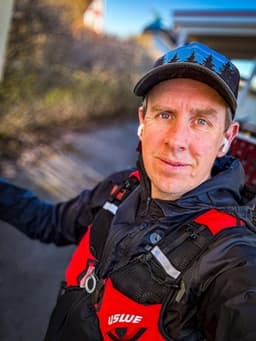
By ZealZag Team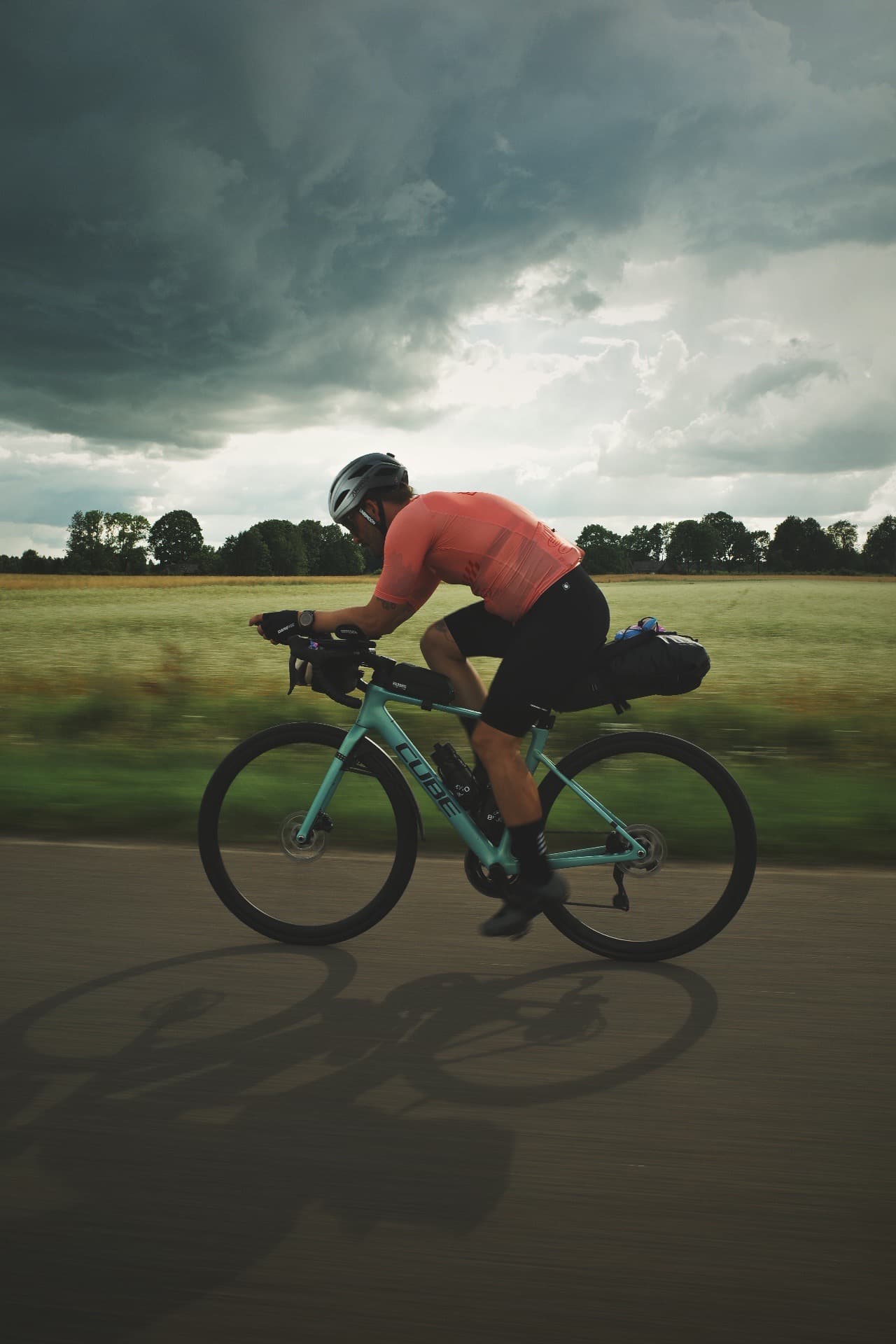
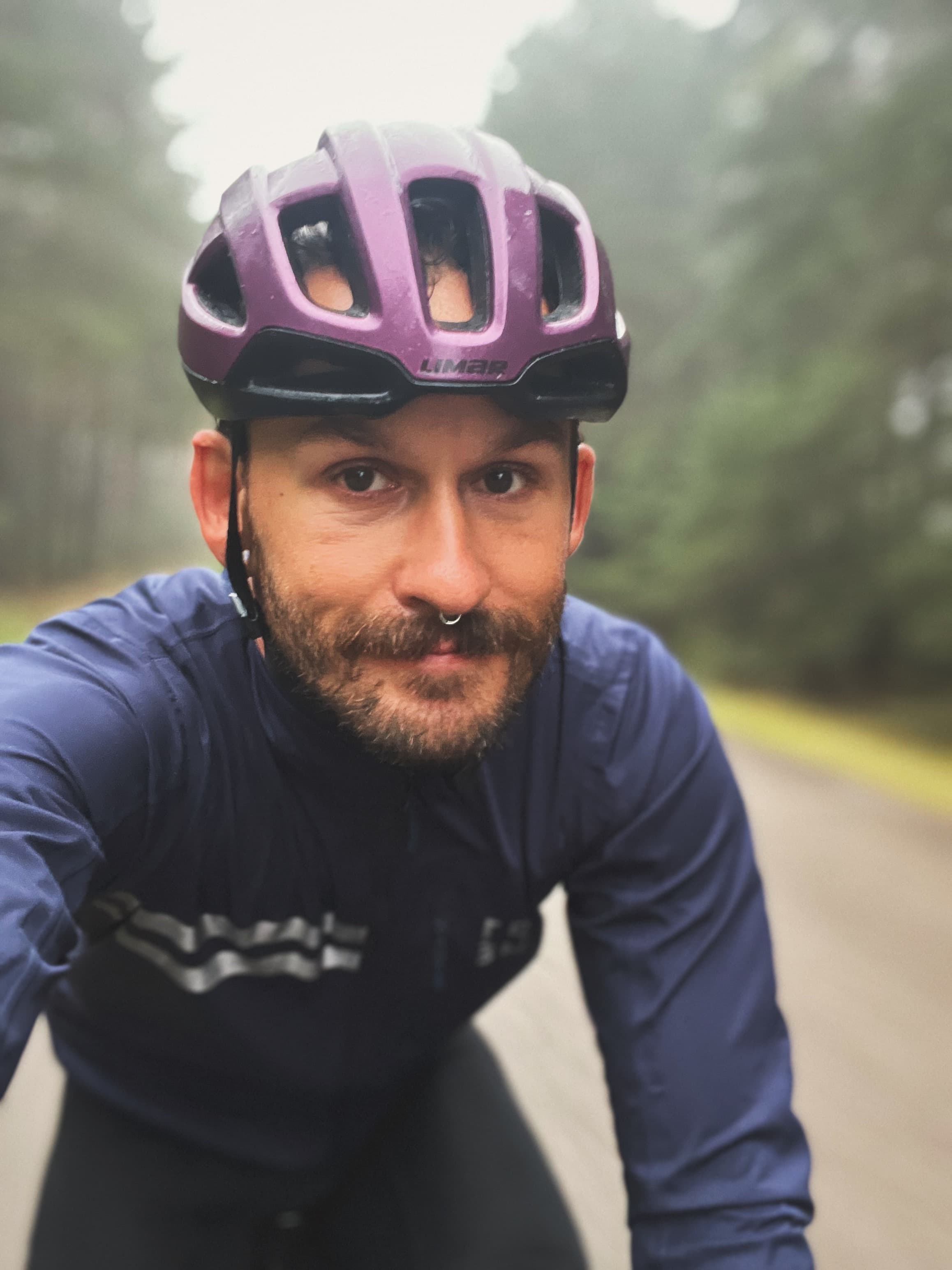
He has been riding bikes since he was a child. Not seriously. Not with any particular intention. Just the way children ride — out the door, down the street, nowhere specific and everywhere at once. The bike was always there. He just hadn't realized yet what it meant.
Years passed. He grew up, found work, built a life. The bike remained — occasional, background, unremarkable. And then one evening he sat down to watch a movie, and something that had been quietly waiting inside him woke up.
The film was Premium Rush. A New York City bike messenger. No brakes. Manhattan at full speed, weaving through traffic with a kind of reckless, exhilarating joy that made sitting still feel almost unbearable.
Mārtiņš watched it and knew, with a certainty that didn't require much analysis, exactly what he needed to do.
"That was the moment I thought — right, I need a fixed gear bike," he says. He laughs a little telling it, the laugh of a man who has since ridden from Latvia to Italy on a gravel bike with a tent strapped to the frame, and who understands precisely how it all began.
He bought the fixed gear. And then, because he had friends who shared the same restlessness, the rides started getting longer.
There is a particular kind of Saturday that belongs only to cyclists — the kind where someone suggests something slightly too ambitious, and everyone agrees before thinking it through, and by mid-morning you are somewhere you have never been before, legs already beginning to speak, the road ahead still long.
Mārtiņš and his friends had many of those Saturdays.
One year, they decided to ride from Riga to the Estonian border and back. A single day. The roads in that part of Latvia are quiet and flat in places, wooded in others, the kind of landscape that feels endless when you are moving through it on a bike — fields opening on either side, the occasional village, the silence between wheels on asphalt. They rode north, crossed the border, turned around, and rode home. Long enough to hurt a little. Long enough to want to do it again.
The following year, they went further. South this time, through Lithuania, all the way to Šiauliai. The road from Riga changes gradually as you move south — the flatlands giving way to something slightly more rolling, the forests thicker in places, the horizon shifting. They rode through it together, the group finding its rhythm the way groups do on long days, conversations starting and stopping, long stretches of comfortable silence, everyone inside their own head and together at the same time.
They made it to Šiauliai. Then they turned around and rode home.
These were not tours. There was no luggage, no overnight stay, no grand plan. Just the road, and the will to stay on it longer than the time before. But something was building — something Mārtiņš couldn't quite name yet.
His knees, though, were beginning to form their own opinion.
The distances were asking something his joints hadn't agreed to — a fixed gear bike, beautiful in its simplicity, demands a relentless, unvarying cadence that accumulates over long days in ways that are difficult to ignore. He began to think about a different kind of bike. One with gears. One built for the distances he was starting to want.
In 2018, he bought a Scott Speedster 30, and a new chapter opened.
He threw himself into it the way curious people do — training plans, power meters, the structured, data-driven side of cycling that has its own language and its own community. He learned things about his body and his effort that he hadn't known before. He got faster. He got fitter.
And gradually, without drama, he began to realize it wasn't quite his world.
Not because there was anything wrong with it. But because when he looked honestly at what made him happiest on a bike, it wasn't a power output or a segment time. It was something else entirely — something harder to measure and more difficult to explain.
He hadn't found the words for it yet. That would come later. First, the world had to stop.
In 2020, it did.
Work, which had always been the steady pressure that shaped every day, suddenly lifted. The noise that most people don't notice until it's gone went quiet. And Mārtiņš found himself with something unfamiliar: time. Unscheduled, unstructured, genuinely his own.
He got on his bike.
Not because he had a goal. Not because he was training for anything. He rode because the days were long and the roads were empty and somewhere out there, beyond the edge of the city, Latvia was doing what it always does — existing quietly, beautifully, without asking anything of anyone.
"The pandemic gave me the time and space to appreciate cycling properly," he says.
Before that, he thinks, work had probably stopped him from seeing how much he truly loved it. Not the performance. Not the numbers. Just the act of riding — the feeling of moving through the world under your own power, with nothing required of you except to keep going.
The Speedster was sold. A Giant Revolt arrived — a gravel bike, wider tires, built for roads that aren't quite roads, for paths that disappear into forests and reappear on the other side of something unexpected. With it came a completely different relationship with what cycling could be.
He had found the word he'd been looking for.
Freedom.
Latvia to Italy. One Week. One Tent.
The adventure that changed everything began in Ogre.
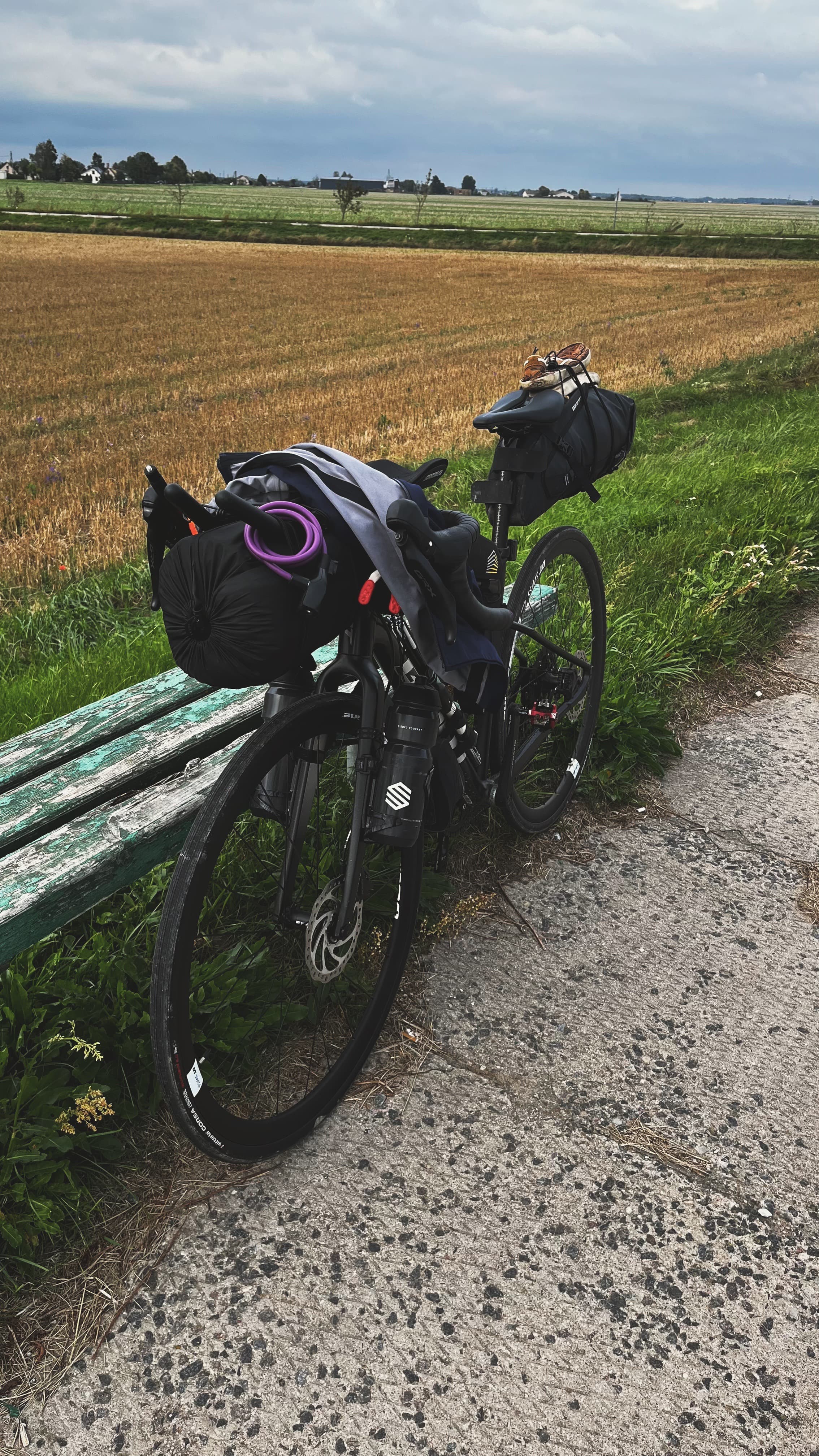
It is a small city east of Riga, on the banks of the Daugava river, unremarkable in the way that departure points often are — the significance comes only later, in retrospect, when you understand what began there. One morning in 2024, Mārtiņš loaded a tent onto his gravel bike, clipped in, and started riding south.
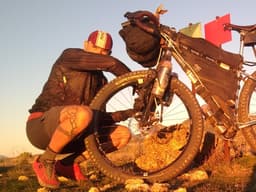
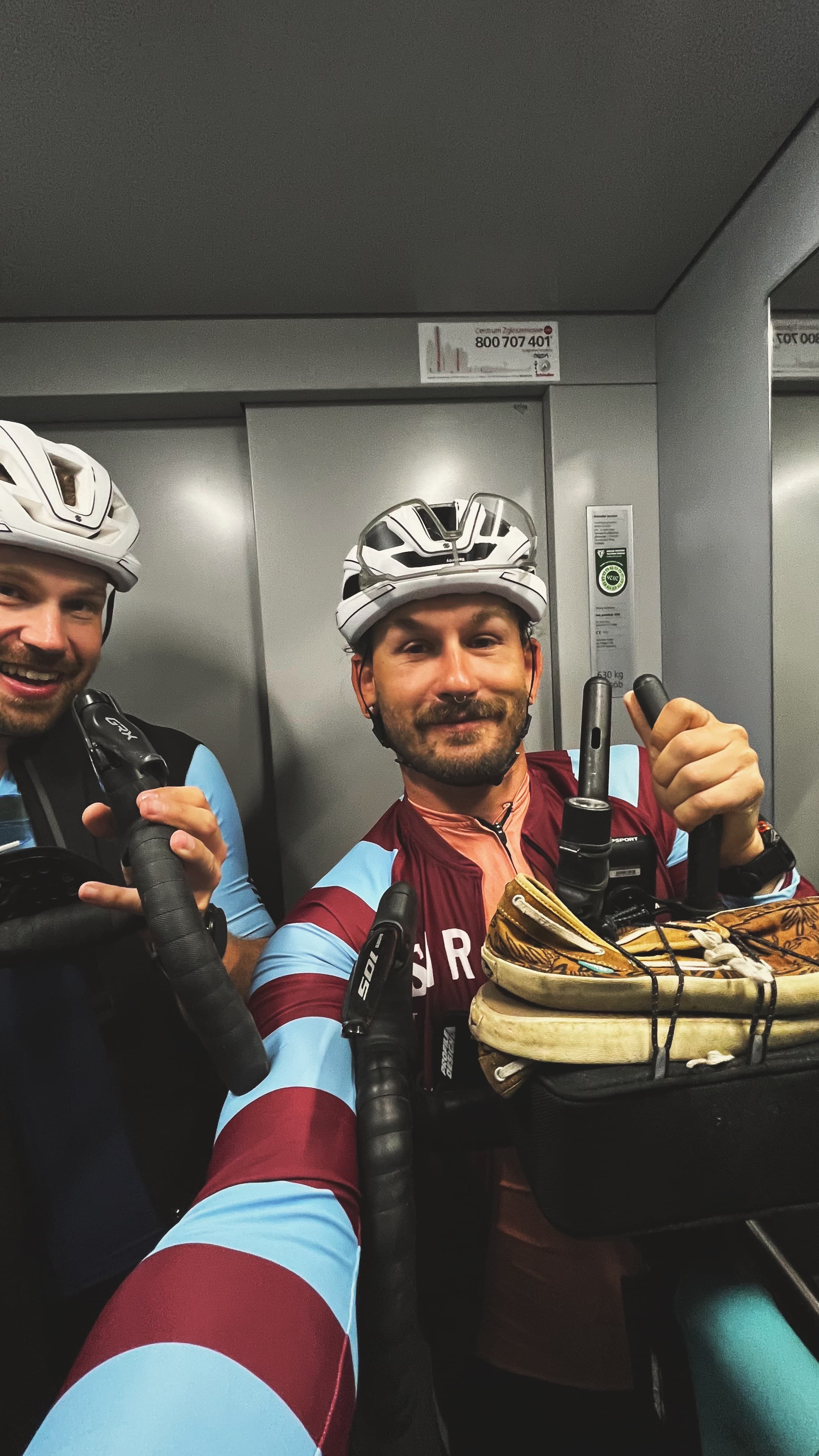
No support vehicle. No hotel bookings. No crew following at a distance with spare wheels and warm food. Just him, the bike, the tent, and the roads of Eastern and Central Europe opening ahead of him one by one.
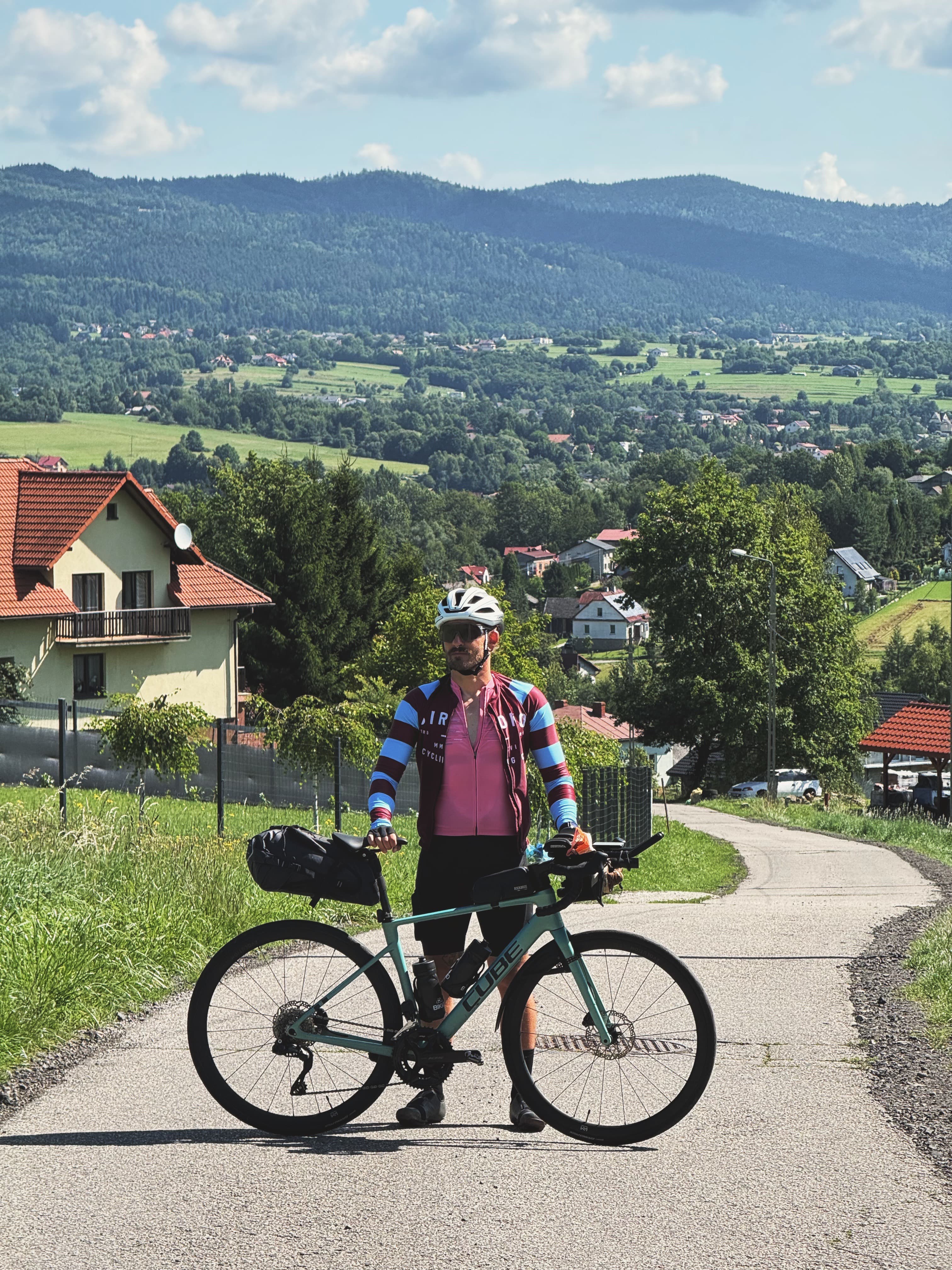
He rode through Latvia. Into Lithuania. Through Poland, which would leave its own mark on him in ways he hadn't anticipated. Through the Czech Republic. Into Austria. And then, finally, into Italy — the light different here, the air warmer, the landscape unmistakably, almost absurdly beautiful.
One week after leaving Ogre, he arrived in Treviso.
“To this day, it remains the greatest adventure I've ever had on a bicycle.”
Something about that journey rearranged things inside him. The solitude of it. The self-sufficiency — the knowledge that everything he needed was either on the bike or inside himself. The simplicity of each morning, which asked only one question: how far today?
He wasn't a racer. He had probably never been. What he was — what cycling had been quietly, patiently showing him since the days of the fixed gear and the Lithuanian border and the long Saturday rides with friends — was an explorer. Someone for whom the road was not a means to an end but the entire point.
He knew that now, with a clarity that didn't require any further argument.
The Country That Got Under His Skin
The road south from Latvia to Italy had taken him through Poland. What began as a country along the route quickly became one of the places that stayed with him long after the journey ended.
He remembers crossing the border from Lithuania — the small forest just on the other side, the road narrowing slightly between the trees, and then the moment the trees ended and the landscape simply opened. Rolling hills, unhurried and enormous, stretching toward a horizon that seemed impossibly far away. Narrow roads winding through them, quiet enough that you could hear your own breathing. The kind of scenery that doesn't announce itself but arrives all at once, and stops you before you've decided to stop.
"I still remember that feeling of wow," he says, and something in the way he says it suggests the feeling has not entirely faded.
He went back.
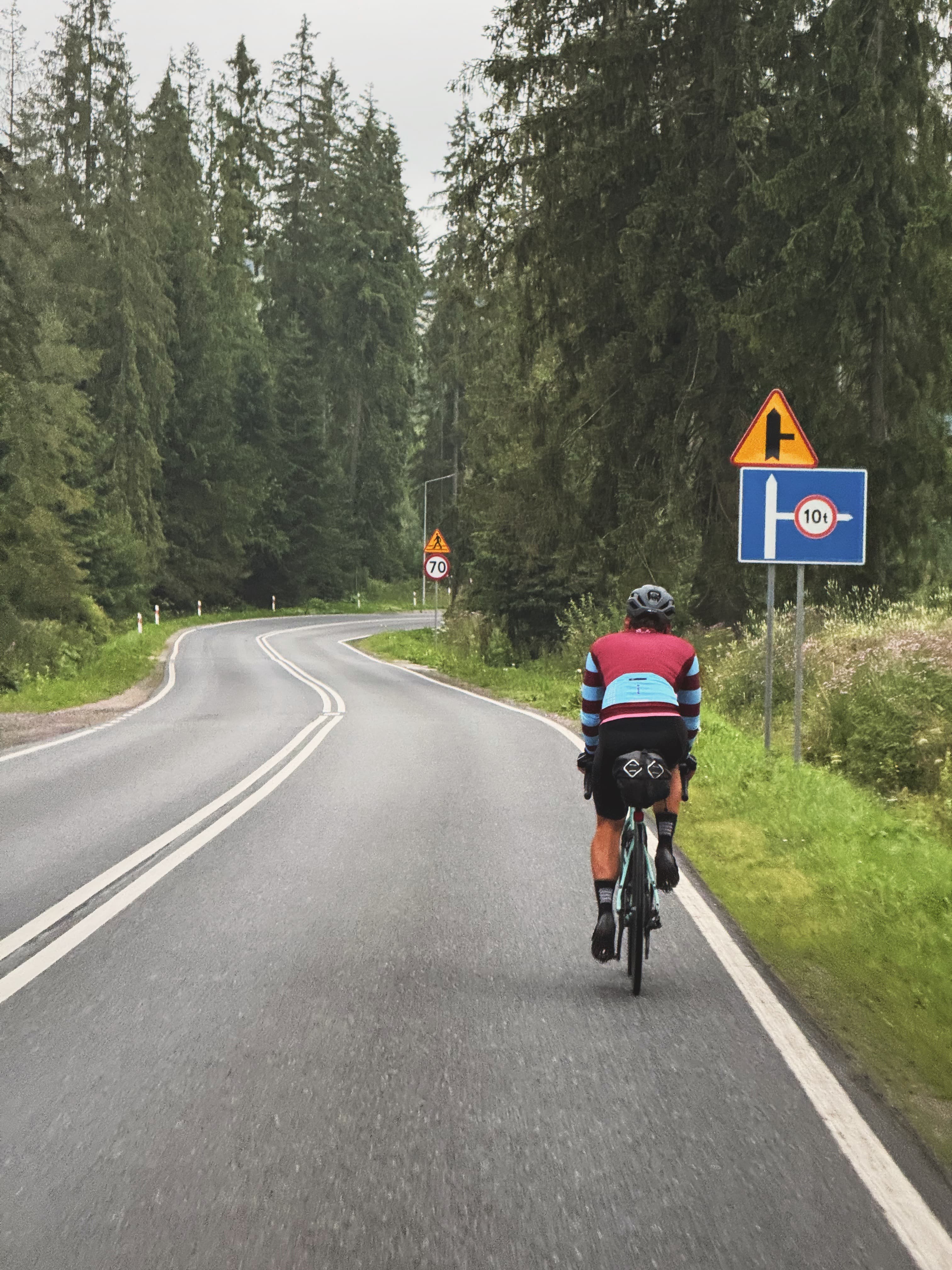
The trip that followed was different from the Italy adventure — not solo this time, but with a friend, which changes the texture of a long journey entirely. They rode from Latvia south through Poland, all the way to the Tatra Mountains, and back again. More than 2,600 kilometers. Ten days. Paved roads and gravel both, on terrain that rewarded attention and punished hurry.
The first three days announced themselves with rain.
Not occasional rain — continuous, determined, indifferent rain, falling across what were also the longest days of the entire journey. More than 300 kilometers each day, completely soaked, the road glistening, the sky the color of old pewter. The kind of weather that, in the planning stages of any trip, exists only as a theoretical possibility.
And yet. Riding through it together, the two of them moving in a kind of stubborn solidarity, something unexpected happened: the rain became part of the story. Not the worst part. Just part of it. "In a way," Mārtiņš says, "it's what makes the adventure so memorable."
The Tatras, when they finally arrived, were everything the long wet days had been building toward — dramatic and enormous, the roads climbing through them with a seriousness that demanded respect. They rode through them slowly, attentively, earning every meter.
And then the mountains were behind them, and the roads began to flatten, and the landscape settled into something ordinary, and Mārtiņš felt something he hadn't expected.
Not relief. Not satisfaction. Something closer to grief.
“That's when you realise the adventure is slowly coming to an end," he says quietly. "There's something bittersweet about that feeling.”
What he felt in that moment — the quiet ache of a beautiful thing ending — said more about him than any distance or elevation ever could.
Gravel Roads and the Freedom They Give
He rides gravel almost exclusively now, and the reason is simple enough that it fits in a single sentence.
“Gravel roads give me freedom.”
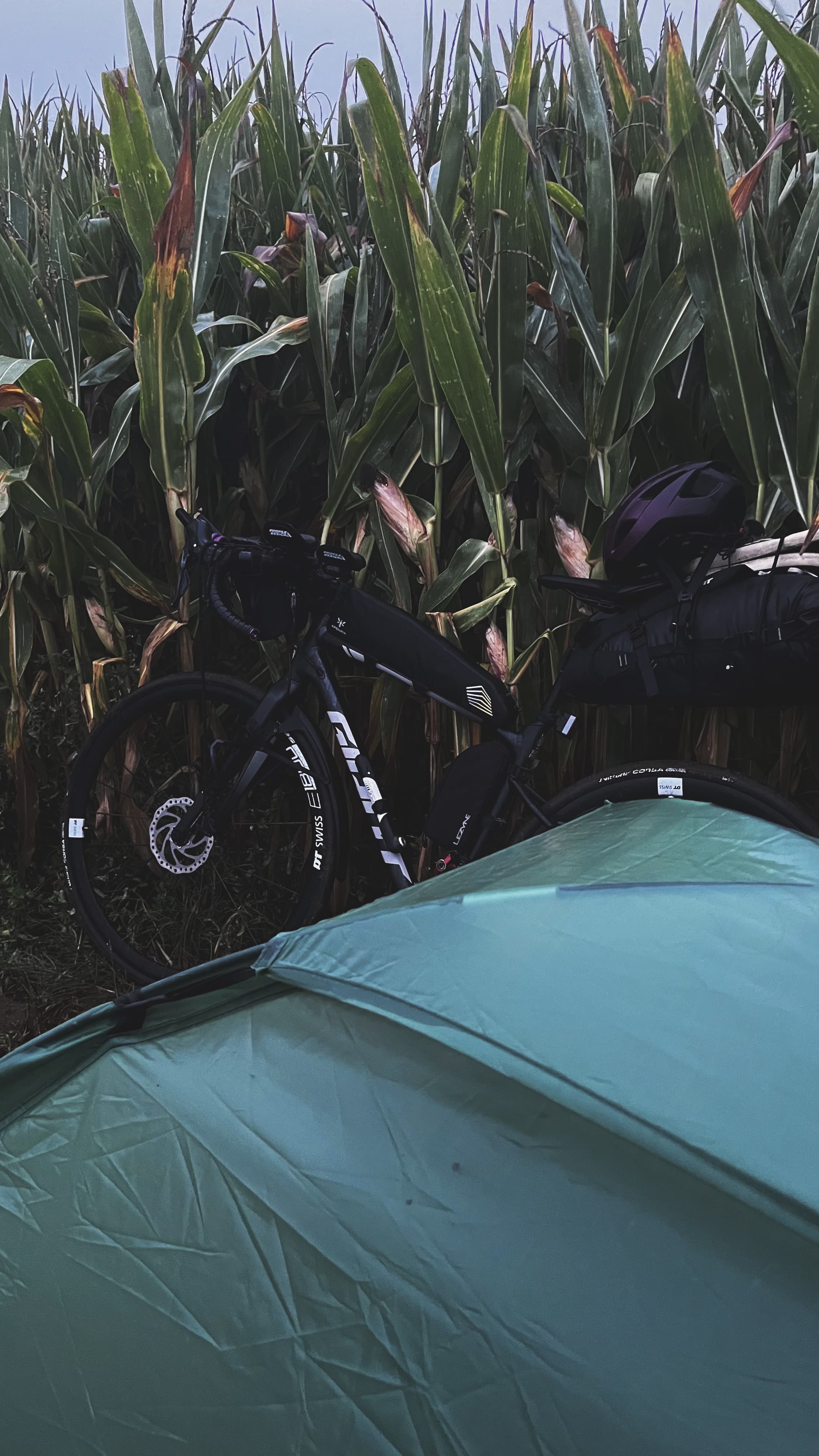
In his own words, the difference is this: "When I'm riding a gravel bike, I don't have to worry too much about the route itself. Instead of constantly checking whether the road surface is suitable, I can focus on the destination and the adventure."
The bike goes where he points it. Into forests. Along riverbeds. Down tracks that don't appear on maps designed for cars. The destination stops being a constraint and becomes, instead, a direction — a general orientation toward something interesting, with the details to be discovered along the way.
This is also true of where he lives. Latvia, he says, rewards the cyclist who is willing to leave the main road. "What I love most about cycling in Latvia is that you never have to travel far to find quiet roads and beautiful nature. In many places, it feels like the landscape belongs entirely to you." The city ends, and almost immediately the forest begins. The roads thin out. The silence arrives. It doesn't require a long journey to find it — just the willingness to look.
Some of his favorite rides have happened simply because he chose the smaller gravel track instead of the paved road beside it. The paved road would have been faster. The gravel track led somewhere worth seeing.
He would make that trade every time.
The Season That Suits Him
Ask Mārtiņš about autumn and something in his voice changes — becomes quieter, more deliberate, the way people sound when they're talking about something they genuinely love rather than something they've been asked about.
He doesn't enjoy heat. Once the temperature climbs above 17°C, he feels it in an unpleasant way, the kind of warmth that makes effort feel heavier than it is. Autumn brings temperatures that feel exactly right — cool enough to ride for hours without suffering, warm enough that the world is still alive and colored.
But it's more than the temperature.
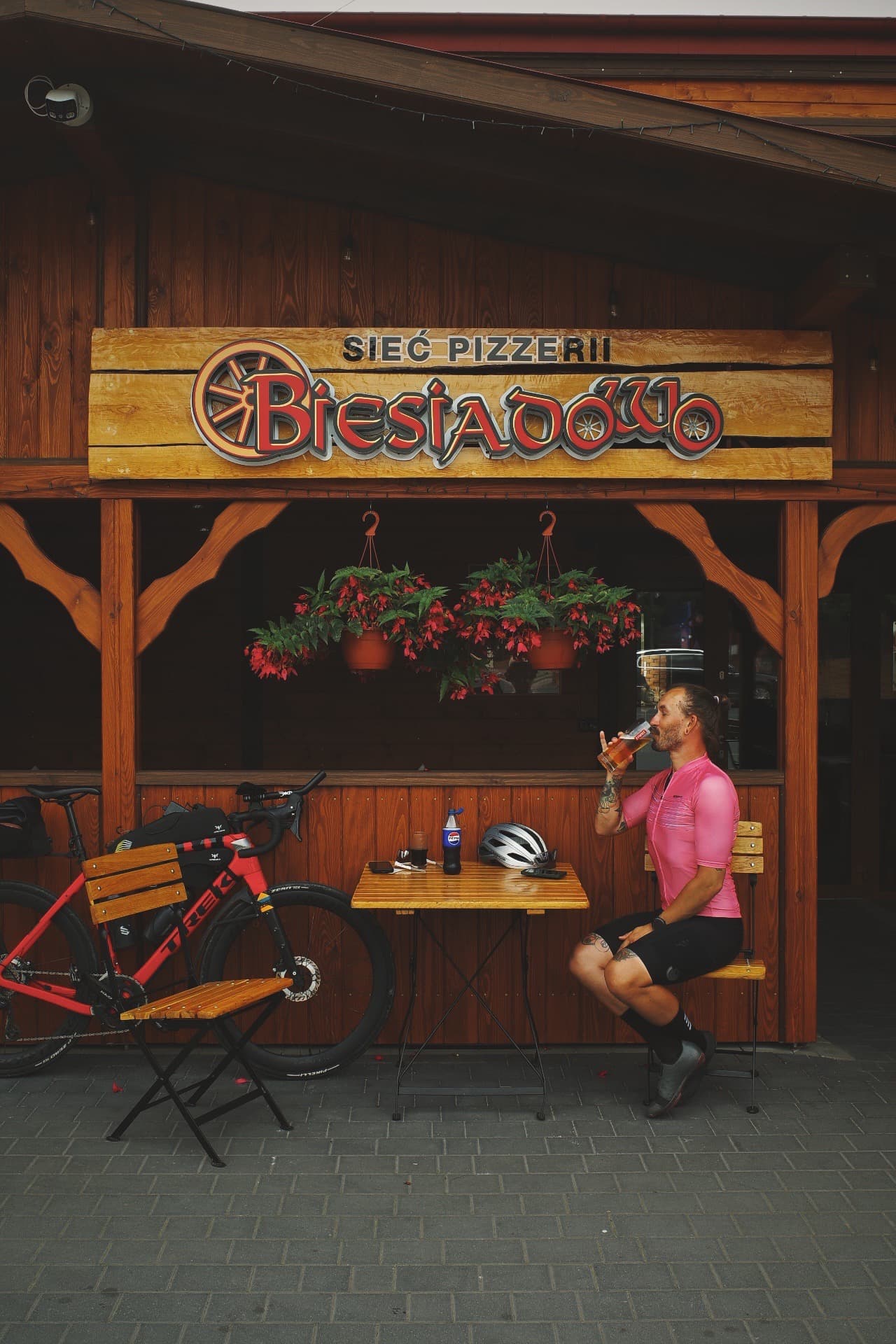
In autumn, the forests in Latvia turn gold and amber and a deep, saturated red that has no equivalent in any other season. The roads grow quieter. The mornings arrive with a crispness that feels like a small gift. People slow down, he says, and he slows down with them. There is a pace to autumn that matches something in his own nature — unhurried, reflective, content to be exactly where it is.
"Every ride feels a little more special during that time of year," he says.
You believe him.
The Joy Is the Point
Here is what Mārtiņš does not care about, stated plainly: carbon bikes, energy gels, sports nutrition, structured training plans, the latest equipment, the endless optimization that cycling culture tends to generate around itself like weather.
He tried those things. Genuinely and with full commitment — the power meters, the training plans, the performance years. He doesn't regret any of it. It taught him things. It also taught him, with a clarity that came slowly and then all at once, that none of it was the point for him.
He rides aluminium without apology. He eats what he eats. He trains by riding, and rests when his body asks him to.
"I like to joke that I'm powered by sunshine and good emotions," he says.
He is not entirely joking.
Asked what piece of equipment he would most recommend to a cyclist looking to improve their experience, he doesn't hesitate.
“Buy a good pair of earbuds.”
Not wheels. Not a power meter. Not an aero helmet. Earbuds — the open-ear kind, the ones that let you hear the road and the music simultaneously, that can lift your mood on a difficult day and make the hours pass differently. For long rides, he says, they've been one of the best purchases he's ever made.
That answer is entirely, unmistakably Mārtiņš.
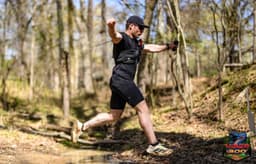
On days when motivation disappears, his approach is equally unforced. He works from home and keeps a routine he has built deliberately — mornings for movement, for being outside, for himself before the day asks anything of him. When the weather turns and the bike feels wrong, he laces up his running shoes and heads to the trails near his home instead. A different movement. The same need.
And if the body simply needs rest, he rests.
“If cycling starts feeling like a punishment, it's usually a sign that I need to change something rather than force my way through it.”
That sentence contains, quietly, everything you need to know about how he lives.
Where the Road Goes Next
This year's plan is a gentler one. A return to Poland — the Suwałki region, lakes and forests and gravel roads that go on longer than seems reasonable. Riding slowly. Spending real time inside the landscape. About a week. Nothing to prove.
Beyond that, bigger adventures are forming somewhere in the back of his mind. Longer routes. Further destinations. The kind of journeys that require months of quiet planning and then a single morning when you load the tent onto the bike and start riding.
“What excites me most," he says, "is the idea of setting off on another long journey, discovering new places, and seeing where the bike takes me.”
The places a bike can take you.
That's the whole thing, really.
Follow Mārtiņš on Instagram: @martinsramza
Sport the World — Powered by Local Athletes.
Keep reading
Running in Purple
A Law Student’s Journey Beyond the Finish Line.
Krakow for Climbers: Polish Jura Limestone, Tatra Granite, and a UNESCO Old Town Base
Poland's best base city for outdoor climbing sits 25 kilometres from the limestone crags of the Jura and two hours from the granite of the Tatra Mountains — and its Old Town is one of Central Europe's best rest-day destinations.
Race the Route: Stage 8 of the 2026 Tour — Périgueux to Bergerac Through the Dordogne
Today's Stage 8 is a flat 180.4 km run from Périgueux to Bergerac through the Dordogne. Here's how to ride the same terrain the peloton races — and turn it into your own endurance session.
More athletes on the map
See all →