The Long Way Up
By ZealZag TeamFrom World Cups to the limestone walls of Europe, Julia Fišer discovered that the greatest climbs are not always the ones that take you higher — but the ones that change the person making the ascent.
By ZealZag Team
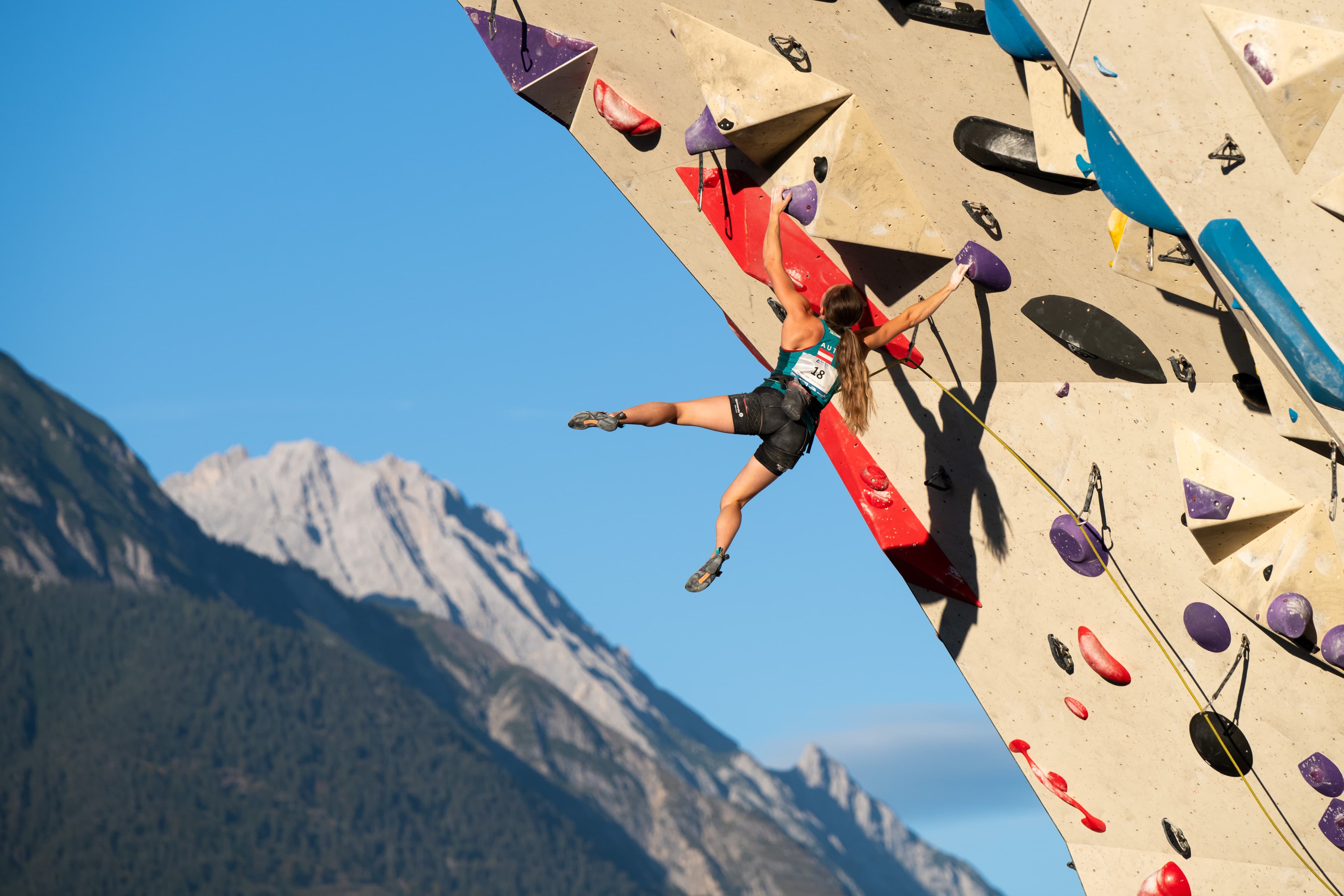
Photo by Tobias Lanzanasto
On a Tuesday morning in April 2025, Julia Fišer pulled off the ground at Achleiten, Austria, on a route she had first tried five years earlier. The first section felt shaky. She told herself it was just a warmup. She hadn’t expected this to be the day. But when the real climbing began, something changed. Her head went quiet. No “what ifs.” No calculations about what might go wrong. Just the next move, and then the one after that. After the first crux, somewhere in the back of her mind, she already knew. She stayed calm and let her body do the work it had been doing — in training and in trying and in failing and in returning — for five years. She completed the last crux without any problems. The one that had thrown her off so many times. Standing at the top, she found herself wondering how it had taken so long. And then she understood.
“Now I realise that it only felt so easy because it took me so long.”
FOURTEEN YEARS OLD AND ALREADY CLIMBING
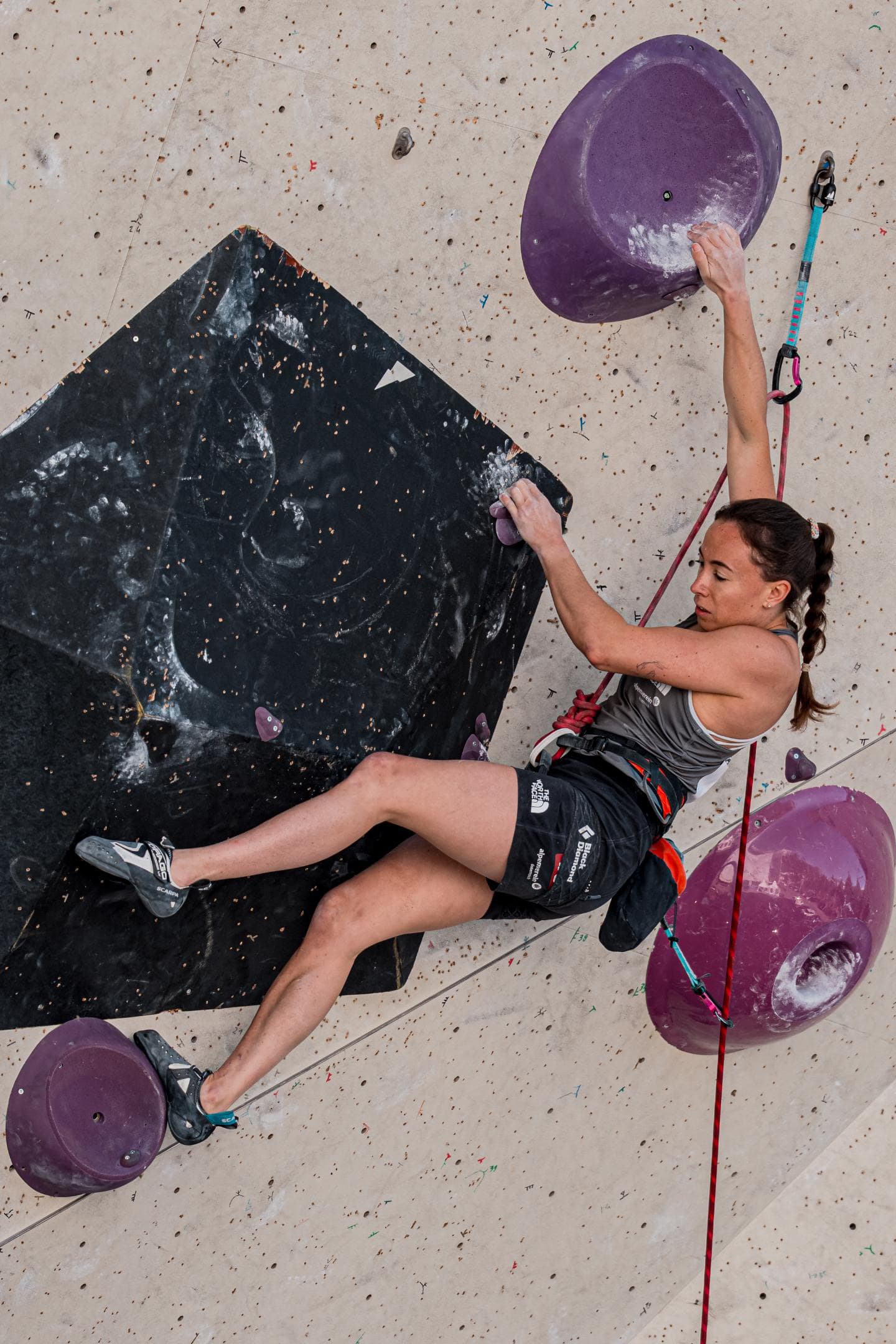
Julia Fišer grew up in Austria and began competing in climbing at the age of fourteen. One of her first international competitions took her all the way to New Caledonia for the World Youth Championships. It was there, she says, that she understood what this sport could mean. She decided that this was what she wanted to do with her life. She is twenty-nine now. Between that decision in New Caledonia and today lies a career that has taken her to competitions in China, Japan, Indonesia, South Korea, France, Switzerland, Slovenia, Italy, Spain, the United Kingdom — a World Cup circuit that circles the globe every season and asks its athletes to show up and perform, again and again, under pressure, at altitude, sometimes sick, sometimes in the hardest weeks of their lives. She has done all of it. And she has always been honest about what it actually felt like. After the Chamonix World Cup last year, where she finished thirteenth, she wrote something that her ranking didn’t come close to explaining. The weeks before the competition had been, she said, probably the hardest of her life. She couldn’t sleep. She couldn’t eat. Climbing was the only place where she could shut out the thoughts in her head. And when her training went well despite everything, her first instinct was to tell herself it was because she had lost weight. That a number on a scale was the reason she was climbing stronger. She stopped herself.
“Deep inside I should know it’s all the training I put in, and not the number on a scale that defines how hard I can climb. But in some moments it’s hard to truly believe that. I just want to leave this here to show you that not everything is always as perfect as it seems on social media, even if the results are good.”
She left it there. Not because she had resolved it. Because she thought someone else might need to see it.
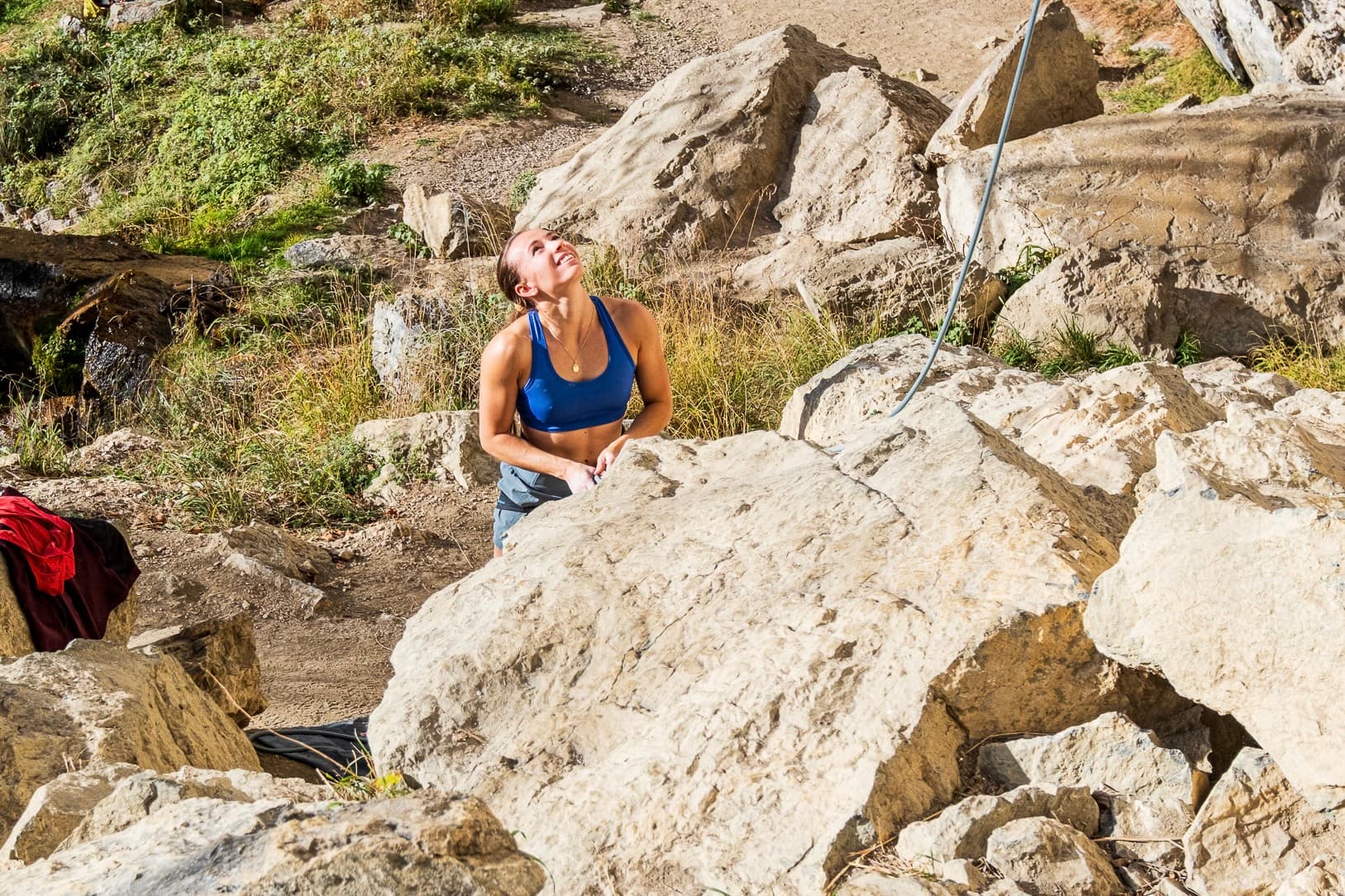
Photo by Katerina Fiser
THE FIVE-YEAR ROUTE
In 2020, she first tried a route at Achleiten called Tunnelblick, graded 8c+. She also started working on Wassermusik at Schleier Wasserfall, a limestone crag one hour from Innsbruck where a mountain stream cascades down the center of the rock face and some of the hardest routes in Europe have been established. She worked on both between competitions, in training blocks, whenever the conditions allowed. Wassermusik needed a dry autumn window — the crag tends to stay wet. In November 2024 it was dry enough. She finished it. Tunnelblick waited. In December she had one or two more sessions. The moves felt better than ever, especially the crux. But she knew she was arriving there with too much pump in her arms to hold the small crimps at the end. She trained specifically for that endurance. Then, the week before the first World Cups of the season, she decided to try once more. The crag would soon be too warm. She pulled off the ground. The first section felt shaky. She told herself it was a warmup. Then everything went quiet.
“My head was clear, no ‘what if’s’, just pure focus on the next move. The flow state that we all seek and admire.”
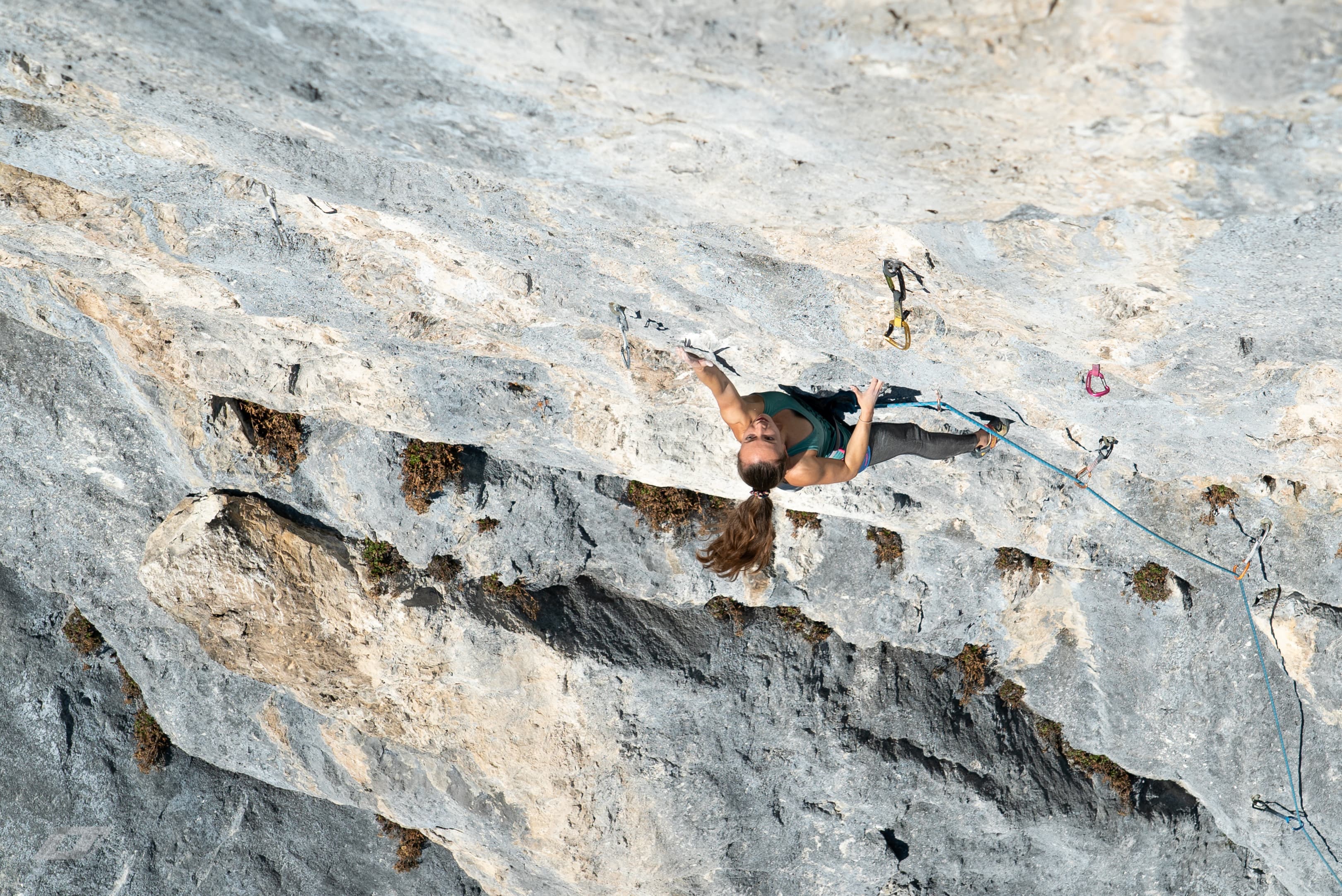
Photo by Tobias Lanzanasto
After she passed the first crux, she already knew. She stayed calm. When the last crux came and went without any problem, she stood at the top wondering how it had taken so long. Then she understood what she had gained.
“I understand that the journey that led me to climb Tunnelblick truly turned me into a better climber. Not just physically, but mostly mentally.”
EVERY PLACE HAS SOMETHING TO TEACH
She went to Catalunya once not knowing what she was looking for. She came back with answers to questions she hadn’t even known she was asking herself. That is how Julia moves through the climbing world. Each place is not a destination. It is a classroom. Oliana in Catalunya for sport climbing — steep overhanging limestone where the routes are sustained and physical and the endurance required takes years to develop. She goes in winter when the rock is at its best. This winter she is going back to work on a route called Joe Blau. Mallorca for deep water soloing — sea cliffs above the Mediterranean, no rope, no harness, the water below catching every fall. Movement on rock in its most direct form. A different kind of focus entirely. The Silvretta for bouldering — the mountain range between Austria and Switzerland where short explosive problems on high-quality rock ask for power and precision in equal measure. And in autumn, Portugal. For sport climbing and deep water soloing on a coastline she has never seen. The reason she is going isn’t because the climbing is the hardest in the world or the most famous. It is simpler than that. She has never been there before. That curiosity — the willingness to go somewhere new simply because it is new, to let the place teach whatever it wants to teach — is as much a part of who Julia is as any grade she has ever climbed.
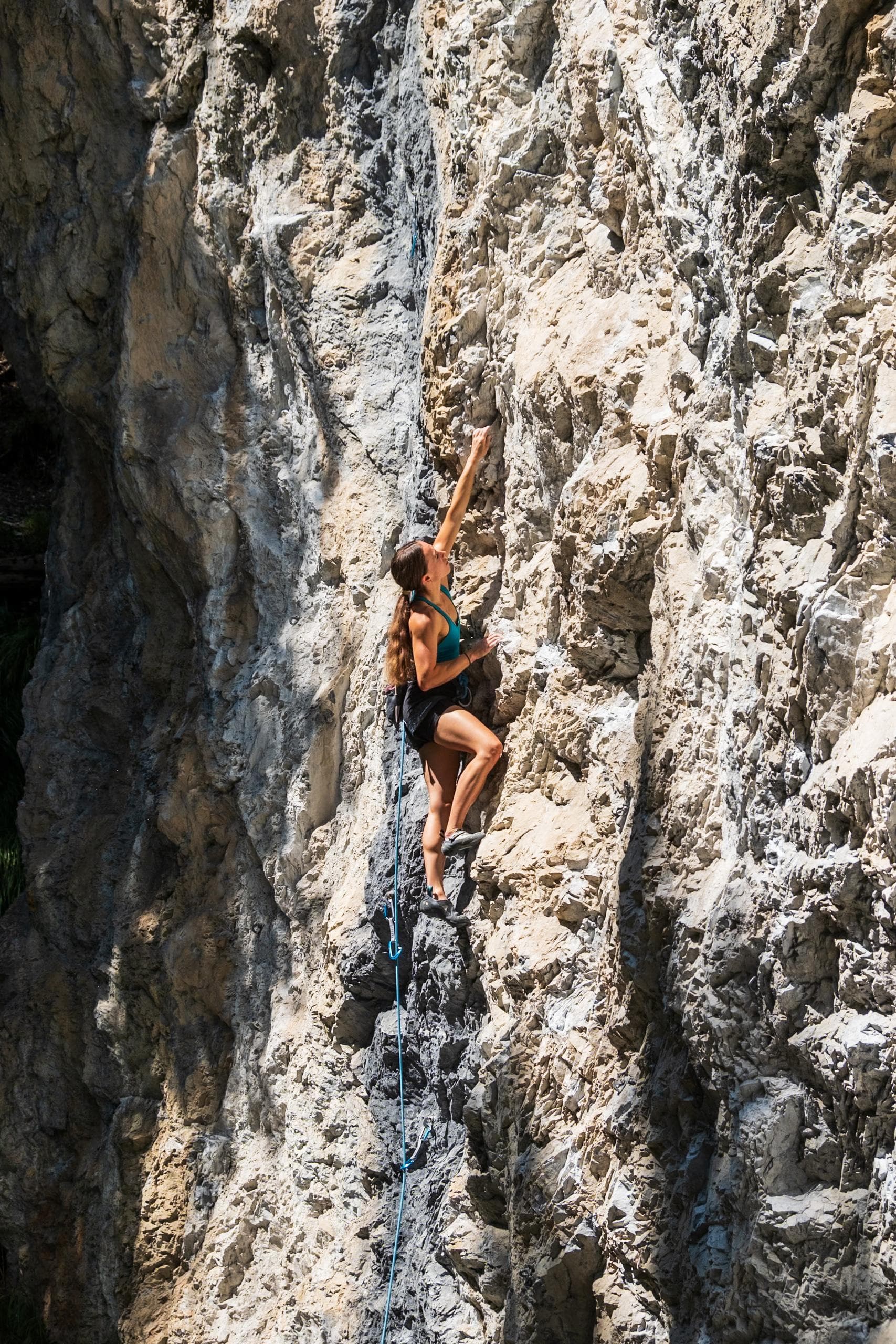
Photo by Katerina Fiser
ABOVE THE SEA, WITHOUT A ROPE
In 2021, friends invited Julia to Mallorca to try deep water soloing. She had never done it. She went anyway. What she found surprised her. Without a rope, above open water, her mind went somewhere she hadn’t expected — quiet, focused, fully present. The exposure that might have been frightening became something else entirely. She found the flow state that climbers spend years chasing. Then one day, fear arrived. A downclimb she hadn’t anticipated. A no-fall zone. The same hands that had climbed hundreds of routes felt suddenly uncertain. It took everything she had to keep moving. At the bottom, she wasn’t sure she could go back up. A friend stayed with her. He climbed first, offered guidance, reminded her what she was capable of. Slowly the confidence returned. She followed. She reached the top. She came home from Mallorca with something she hadn’t gone looking for: the clear understanding that the greatest things are rarely done alone. Months later, a gym injury took away much of what she had built. The memory of Mallorca is what helped her through it.
WHAT SHE FOUND EVERYWHERE SHE WENT
Fifteen years of travelling the world as a climber. Fifteen years of arriving at crags in countries where she didn’t always speak the language, where the rock was different and the culture was different and the people were strangers. She was welcomed everywhere.
“Great things are never achieved alone. Because even when you stop believing in yourself, there’s always someone out there who believes in you and your abilities.”
“Climbing showed me what community really means. In the last 15 years travelling the world I always felt welcomed by climbers and made friends from all around the world. They taught me that climbing is not just about pushing your own boundaries beyond imagination, but also about trusting each other, lifting each other up and learning from each other.”
That is the order of importance in her world. Not rankings. Not grades. Not podiums. Community first. The trust between a climber and a belayer, between two people sharing a project, between a stranger who becomes a friend at the base of a cliff and stays one for the rest of your life. Climbing, she says, is not a sport. It is not a hobby. It is a teacher. For every aspect of life.
“The amount of things that I learned about life through climbing blows my mind over and over again.”
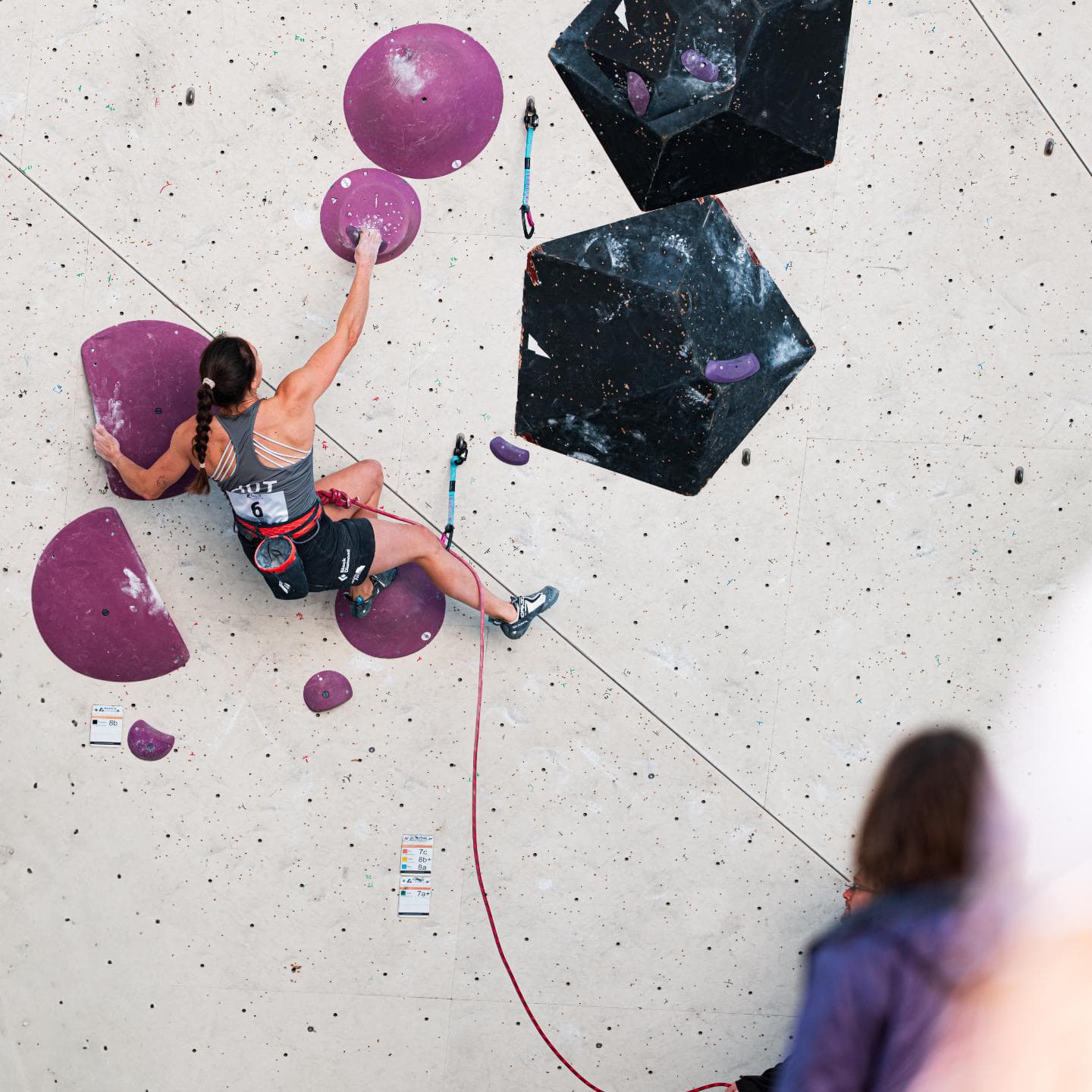
Photo by Matthias Bauer
INNSBRUCK, JUNE 2026
On June 21, 2026, Julia Fišer competed at the World Climbing Series in Innsbruck. Her home city. The event where two years earlier she had placed ninth — one of the best results of her career. After the event, Austria Climbing announced that she had decided to end her professional competition career. Almost fifteen years. The Chamonix semifinal. The Seoul World Championships, where she arrived sick and couldn’t recover in time, and was devastated not because she had performed badly but because that season she had finally turned powerful routes into her strength — had worked for so long to be ready — and then timing had taken it away. The Tuesday morning at Achleiten when Tunnelblick finally fell. She is twenty-nine years old. The competitions are over. The lessons aren’t. Portugal is waiting. So is Oliana. So is Joe Blau. After almost fifteen years on the World Cup circuit, Julia knows that climbing is measured in far more than grades. It is measured in trust. In patience. In friendships formed at the base of a cliff. In the quiet confidence that comes from returning to the same wall, again and again, until it finally teaches you what you came to learn. The competition chapter is closed. Everything she learned from it stays — the rock, the people, the lessons, and everything in between.
Meet a ZealZag Athlete
More athletes on the map
See all →