Built for the Ride and the People Who Matter
By ZealZag Team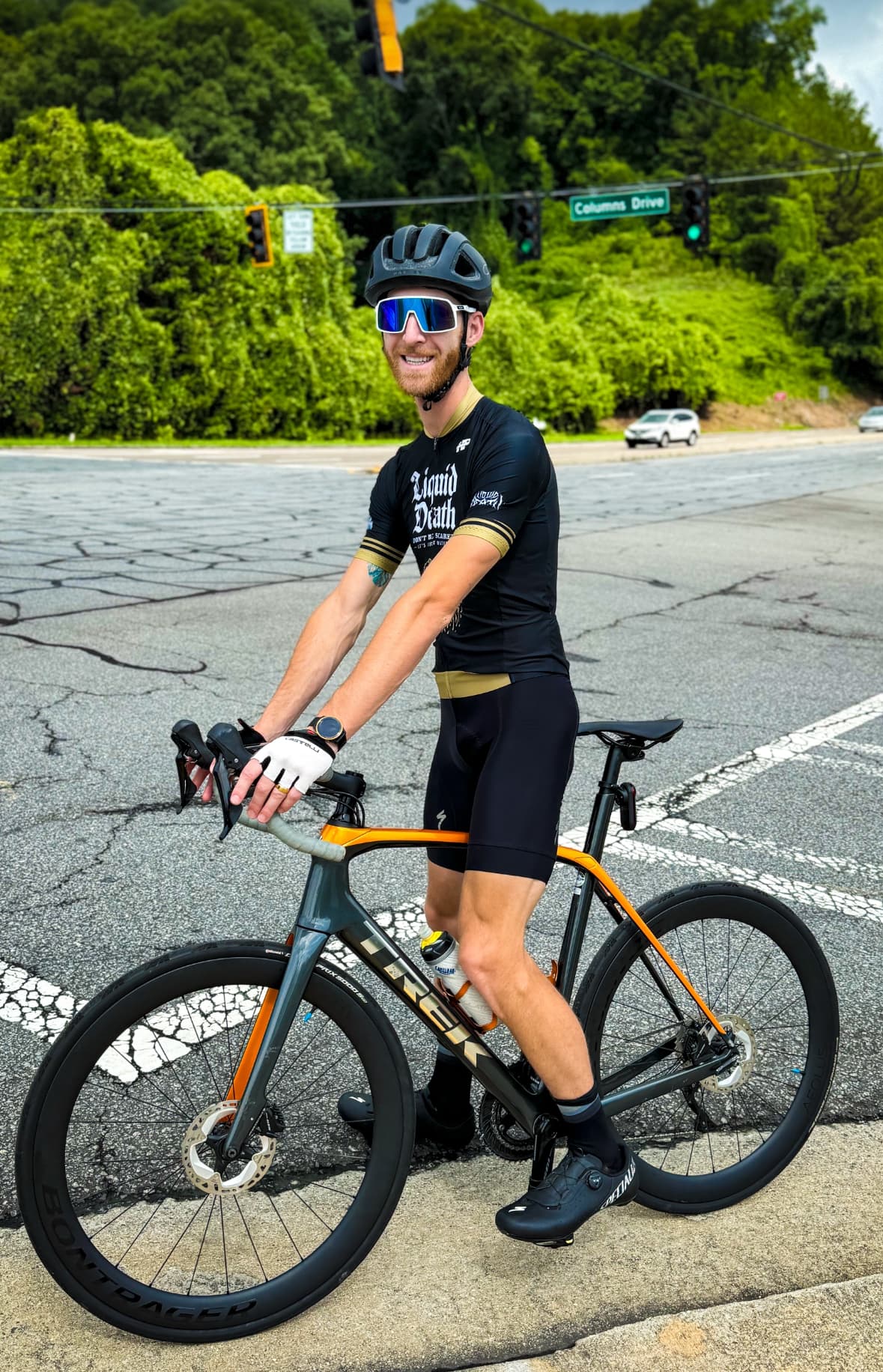
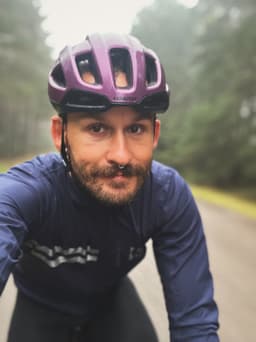
There is a moment that happens to certain people, somewhere between the first ride and the hundredth, when cycling stops being something they do and becomes something they are.
Drew remembers his.
“The turning point came when cycling stopped being something I did and became something I planned my life around.”
He wasn't chasing a race result when it happened. He wasn't training for anything specific. He was simply paying attention — to the early mornings he started waking up for, the equipment he found himself researching late at night, the way a ride would end and he'd already be thinking about the next one. The sport had quietly moved in and rearranged everything.
It shows up in how he spends his free time, where he travels, the content he creates, and the friendships he has built along the way. Cycling is not a hobby that fits inside his life. It is the architecture his life is built around.
Atlanta, from the Saddle
Atlanta doesn't always get mentioned among the premier cycling destinations in the United States. Drew thinks most people simply haven't experienced it from the saddle of a bike.
What makes the area special is variety. Within a single ride, the terrain shifts constantly — suburban roads giving way to rolling countryside, the landscape opening gradually toward the North Georgia mountains in the distance. The roads keep changing, which means the rider has to keep paying attention, and paying attention is most of what good cycling requires.
If someone came to Atlanta for a single day of riding with Drew, he knows exactly where he'd take them.
The Silver Comet Trail first — 61.5 miles of smooth, car-free path following the old Seaboard Air Line Railroad corridor westward from Smyrna toward the Alabama state line. Wooded stretches, farmland, a 700-foot tunnel carved through solid rock, historic trestles crossing creek valleys far below. Flat enough for any rider. Long enough to satisfy anyone.
Then the Kennesaw Mountain climb — a 2.3 kilometer ascent at an average grade of 7.2% inside Kennesaw Mountain National Battlefield Park, a Civil War site about 25 miles northwest of the city. The road rises steadily through the trees, the surrounding landscape carrying the weight of 1864, and at the top the Atlanta skyline appears in the distance. It is the kind of climb that earns its view.
And then the Columns Road loop, winding through the Chattahoochee River National Recreation Area near Marietta — forest, river views, and the kind of quiet road that rewards the cyclist who is willing to leave the main routes behind. This is Drew's home territory, the loop he returns to, the one that has become personal over years of riding it.
The cycling community in Atlanta, he adds, is part of what makes all of it worth discovering. Strong, welcoming, and built by people who found something here that the rest of the country hasn't fully noticed yet.
The Technical Side of Love
At some point, Drew became fascinated by how much the small details matter.
A tire change. A wheel upgrade. A properly maintained drivetrain. A better bike fit. Any one of these things can completely transform a ride, and once he understood that, he couldn't stop learning. He consumes cycling content constantly — YouTube, TikTok, anywhere someone is explaining how something works and why it matters. He is, by his own description, someone who goes deep.
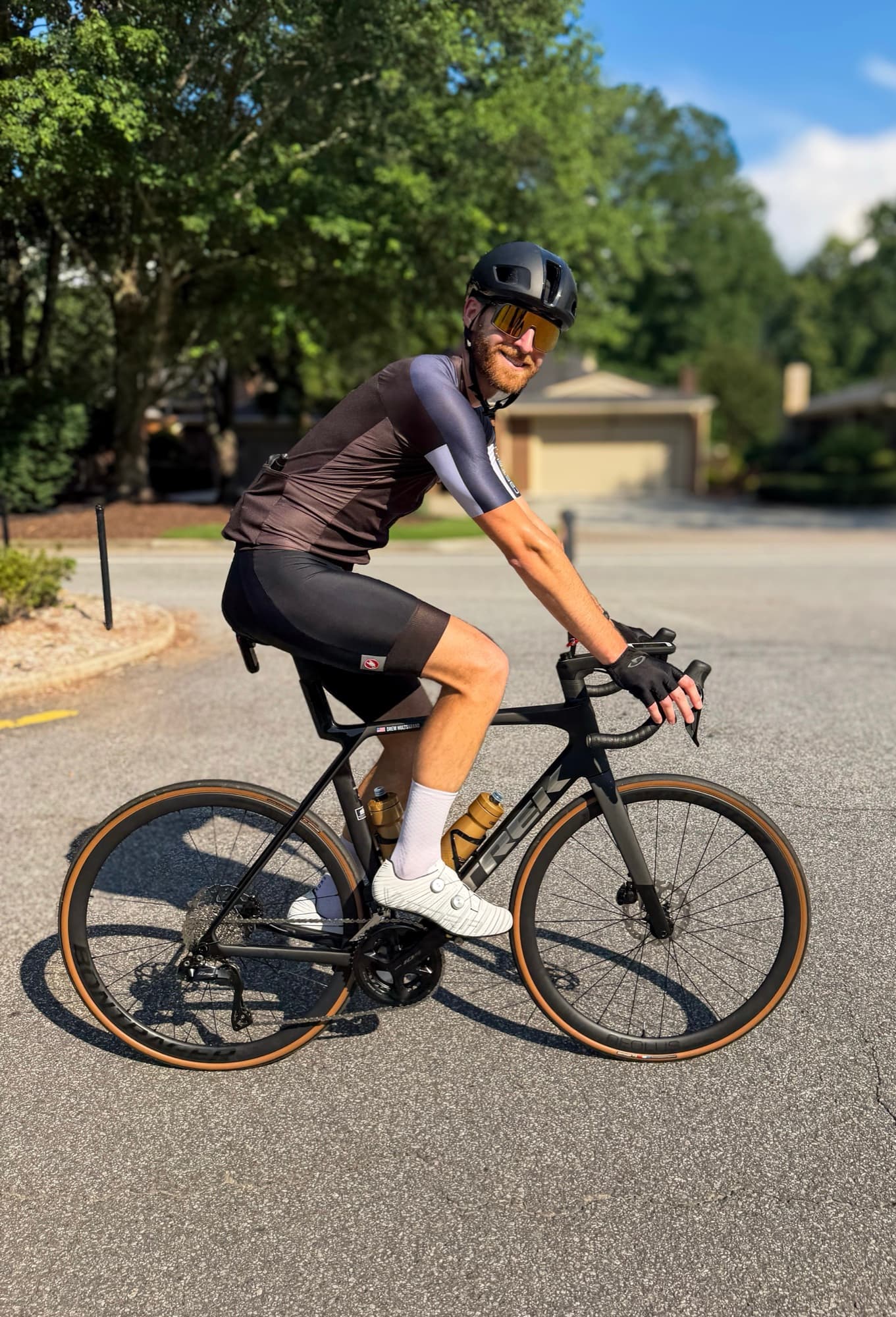
Today he genuinely enjoys working on his bikes. He is the kind of cyclist who notices when a drivetrain becomes slightly louder than usual, who experiments with waxed chains and cockpit adjustments not because he has to, but because understanding the machine is part of the enjoyment. There is something satisfying, he says, about understanding how every component functions and knowing that a little attention can make the bike faster, quieter, and more enjoyable to ride.
If he could recommend one thing every cyclist should prioritize, it would be drivetrain maintenance — regular cleaning, proper lubrication, or the move to a waxed chain setup that he has already made himself. A smooth drivetrain improves performance, extends component life, and makes every ride feel better. It is the kind of advice that comes from someone who learned by doing, and occasionally by not doing it soon enough.
Four Ways to Ride
Drew rides in four distinct ways. Each one gives him something the others don't, and together they explain why cycling has been able to hold his attention for this long.
Solo rides are where he finds clarity. No pace to match, no conversation required, no one else's energy to navigate. Just the road, the effort, and his own thoughts loosening as the kilometers accumulate. Some of his best decisions and most creative ideas have come on those rides — the mind freed by the body's rhythm, finally able to go where it needed to go. Most of his rides are solo. That is not a coincidence.
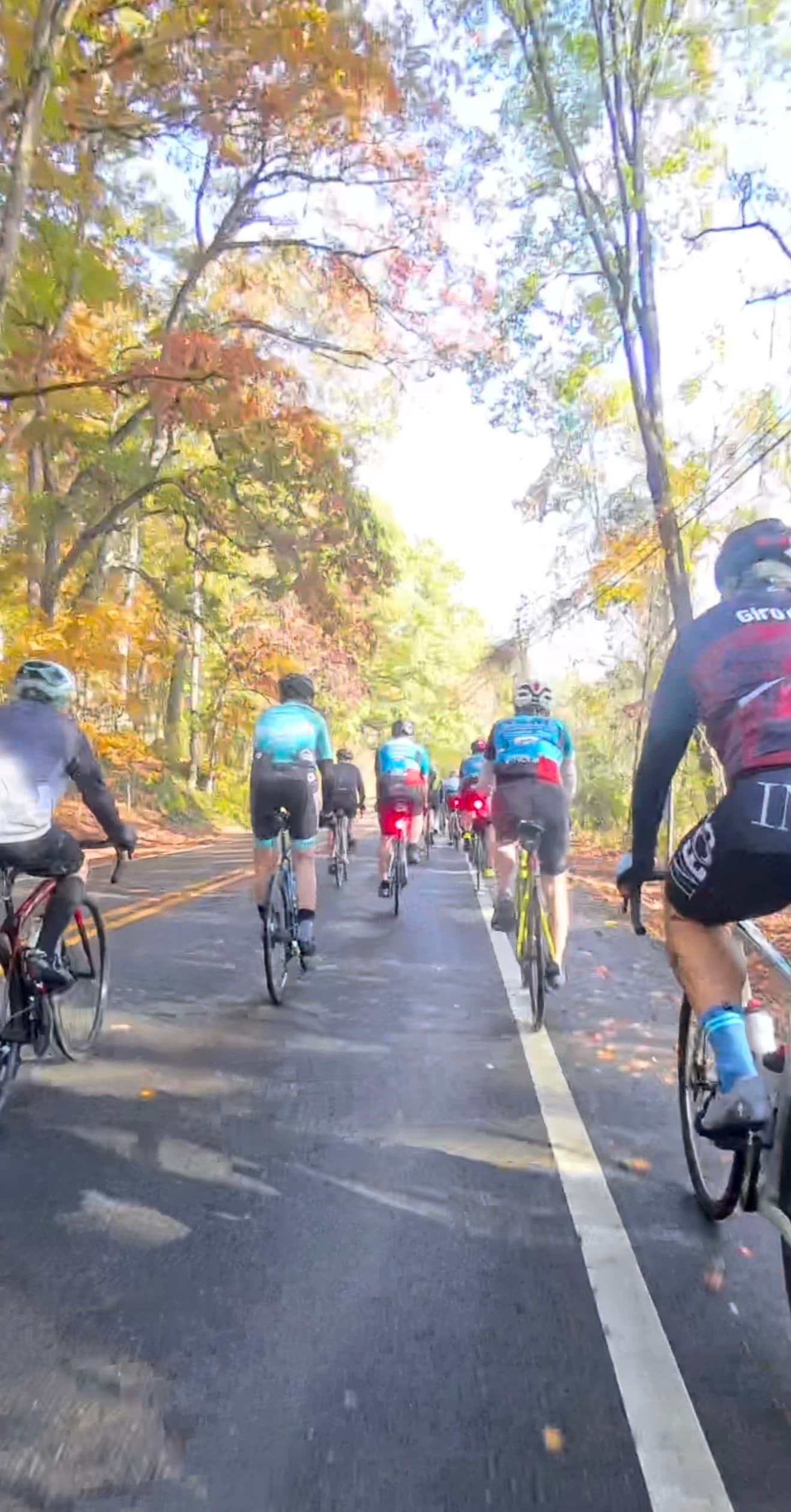
Group rides bring something entirely different. There is competition in them, even when nobody names it. The shared workload, the drafting, the collective momentum of riders who are all trying to be better — it pushes him beyond what he would do on his own. "There's something special about sharing the workload, riding efficiently as a team, and encouraging one another to get stronger." Groups make him a better rider. That is also not a coincidence.
Family rides are something else altogether.
“The pace slows down and performance becomes irrelevant. Those rides remind me that cycling isn't always about watts, speed, or fitness. Sometimes it's simply about spending time with people you care about.”
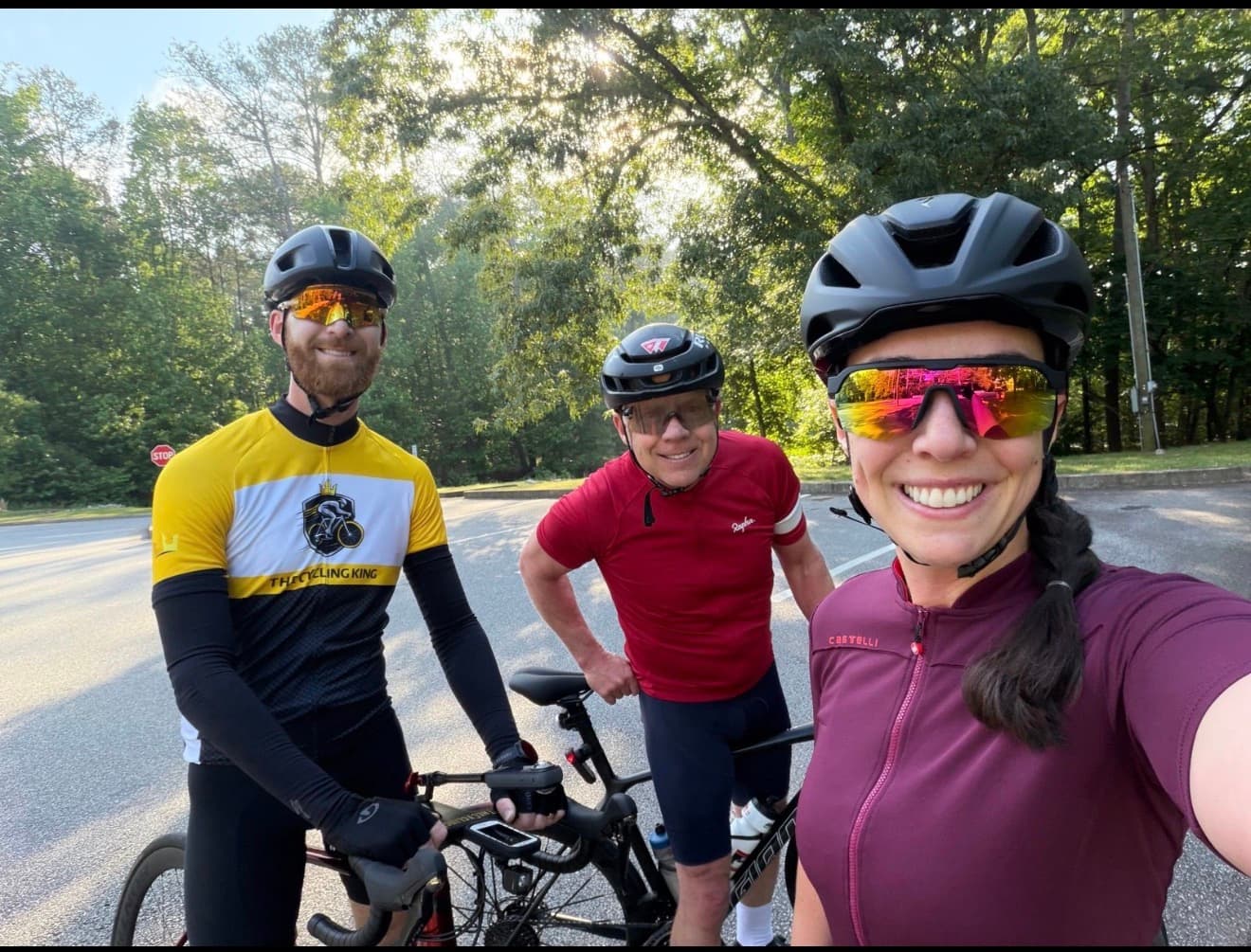
That sentence, arriving after everything he has said about waxed chains and drivetrain efficiency and performance optimization, lands differently than expected. It tells you something important about Drew — that he has not become consumed by the sport at the expense of the people in his life. He has woven cycling so deeply into everything that it now has room for all of it. The competitive and the tender. The technical and the unhurried. The watts and the people.
And then there is night riding.
After dark, everything simplifies. The roads go quiet. Traffic thins out. The distractions that fill a daytime ride — the metrics, the speed, the constant awareness of performance — seem to fall away.
“The beam of your light becomes your entire world," he says, "and there's something incredibly peaceful about that.”
During the day it is easy to get caught up in numbers. At night, he finds himself focusing on the experience itself. The ride becomes what it always was underneath everything else — just him, the bike, and the road ahead. The work emails stop arriving. Slack goes silent. The city disappears.
"There's a level of calm and focus that I rarely find anywhere else," he says.
Four versions of the same sport. Four entirely different experiences. One person who has found a way to need all of them.
Road, Gravel, and an Honest Preference
Drew rides both road and gravel, and he is straightforward about what each one gives him.
“I love the efficiency of a road bike, the feeling of carrying momentum, and the challenge of becoming a stronger rider. There's a level of precision and purpose to road riding that I really enjoy.”
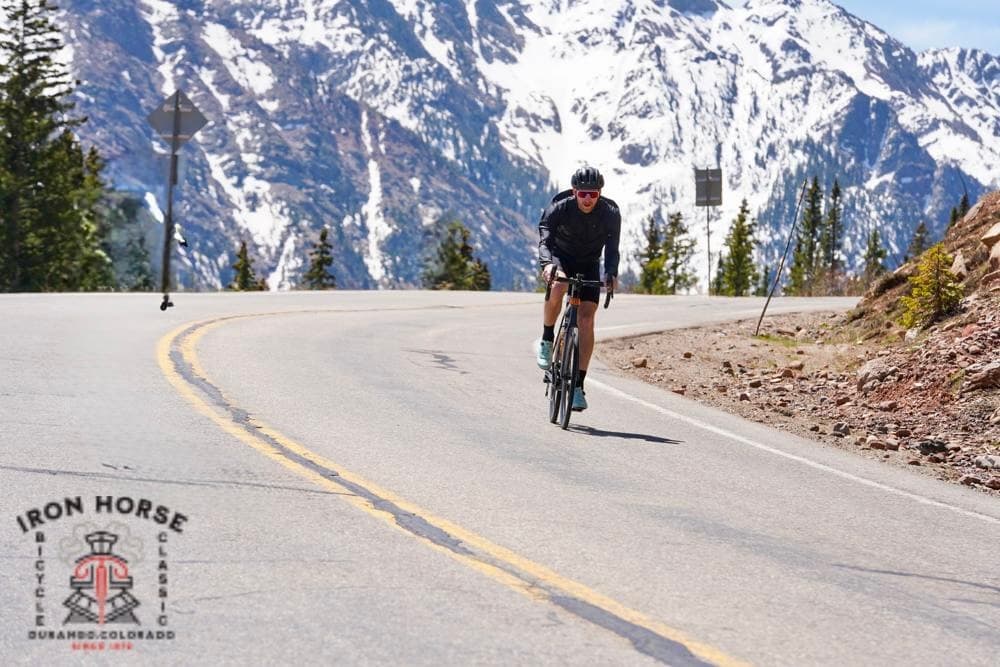
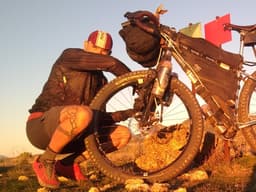
Gravel is a different conversation entirely. "The goal isn't always to go faster," he says. "Sometimes it's simply to see where a road leads."
His setup reflects those two different intentions. On road days, the focus is efficiency, aerodynamics, and responsiveness. On gravel days, comfort, durability, and confidence on unpredictable surfaces take over. Two mindsets. Two different ways of being on a bike.
“Both disciplines make me a better cyclist, and I enjoy switching between them," he says. Then, with the directness of someone who has tried both seriously and made an honest decision: "I much prefer road over gravel at the end of the day though.”
That honesty is characteristic. Drew doesn't perform preferences. He has them, and he says them plainly.
His Brother, a Hundred Kilometers of Gravel, and a Lesson He Hasn't Forgotten
The most demanding ride Drew has ever completed didn't happen on a pristine road bike with a perfect nutrition plan. It happened early in his cycling life, on a course he probably wasn't ready for, on a bike that wasn't built for it.
A hundred kilometers of gravel. Rough terrain, relentless conditions, a course that seemed designed to find every weakness a rider had and press on it.
He didn't have a gravel bike. He was at the beginning of his cycling journey and didn't know enough about fueling to prepare properly. And somewhere out on that course, his body ran out of everything it had — the moment cyclists call bonking, when the legs stop cooperating and the mind starts negotiating with itself about reasons to stop.
The gravel was relentless. The fatigue accumulated in ways he hadn't anticipated. Every part of him wanted relief.
His brother was with him. And his brother refused to quit.
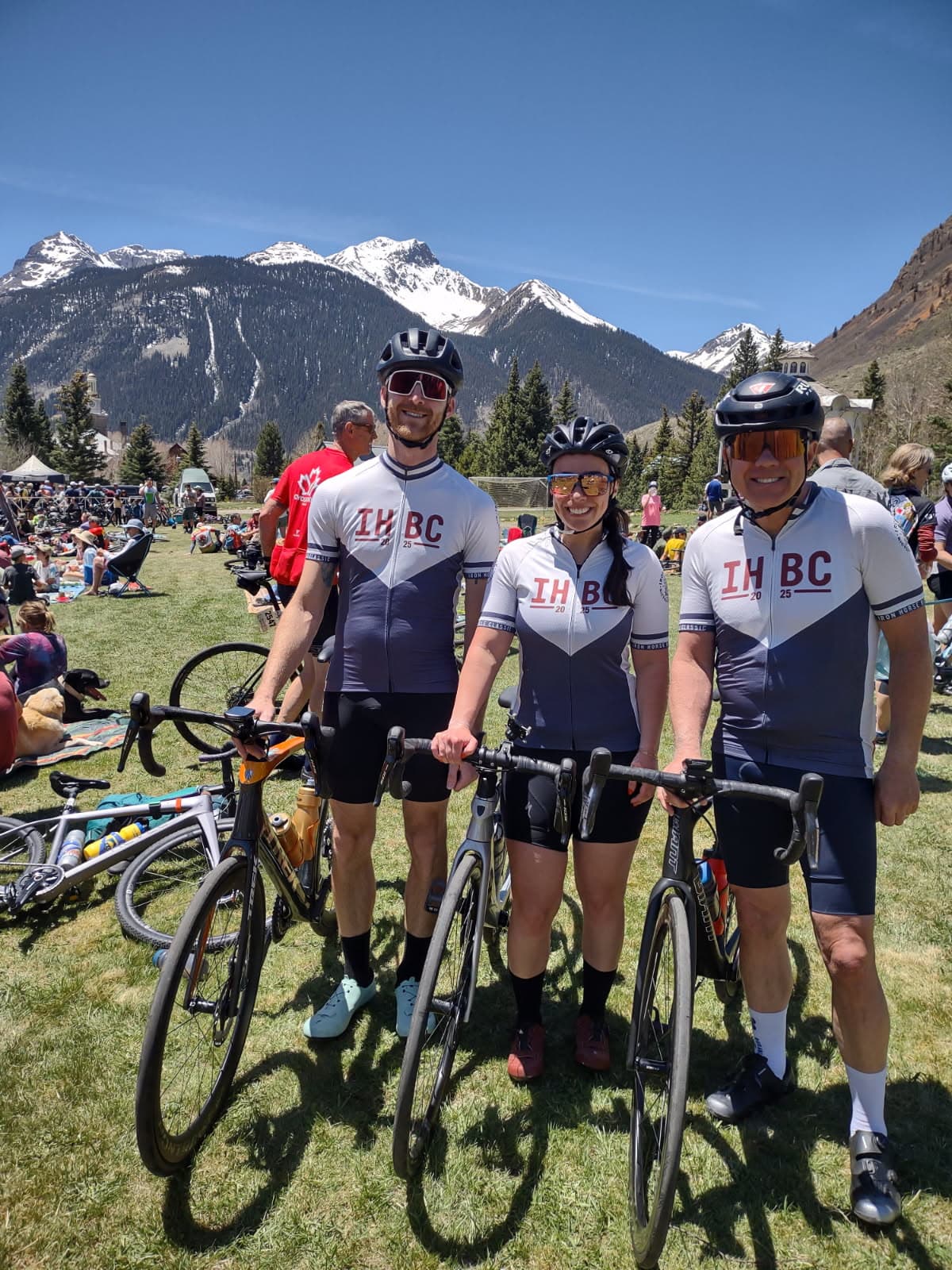
"No matter how difficult things became, my brother kept us moving forward," Drew says.
They finished. And what Drew took away from that day wasn't a finishing time or a placement. It was something quieter and more durable — the kind of understanding that only comes from being pushed past what you thought your limit was and discovering the limit was further than you knew.
“Endurance is about much more than physical fitness. It's about mindset, perseverance, and the willingness to keep going when the outcome is uncertain. Your body can do so much more than you think it can.”
He has carried that with him ever since — through every upgrade, every early morning, every ride that started well and didn't finish that way. The gravel race he wasn't ready for turned out to be exactly the right race to do.
Not a Highlight Reel
When Drew started creating content, he wanted to share experiences he thought other cyclists would enjoy. What surprised him was how many people connected — riders from all over the world commenting about similar experiences, asking about equipment, sharing their own stories.
He made a decision early about what kind of creator he wanted to be.
“I've never viewed social media as a highlight reel. Instead, I want people to see the reality of the journey. The good rides, the bad rides, the upgrades that work, the mistakes that don't, and the constant process of trying to improve.”
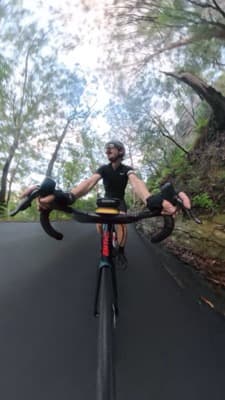
That philosophy runs through everything he posts. The cracked handlebars. The first attempt at waxing a chain. The carefully mounted Insta360. The technical details he works through in real time so that the person watching doesn't have to figure it out alone.
“If someone follows my content, I hope they walk away feeling inspired to get out and ride, regardless of their fitness level or experience or equipment.”
Not faster. Not better equipped. Just out there, riding. That is the whole point of what he does.
The Woman at the Start Line
Ask Drew about his dream ride and the answer comes quickly.
Girona, Spain. The roads, the scenery, the cycling cafés, the culture surrounding the sport. As someone who follows professional cycling closely, Girona has been near the top of his list for years — a place every serious cyclist should experience at least once.
And who would he bring?
His wife. The person who has supported his cycling journey from the beginning. The person he wants beside him when the riding is beautiful and the place is new and the day belongs entirely to the two of them.
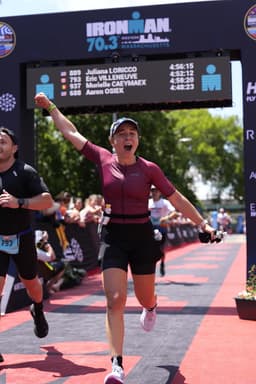
She is also, it turns out, the person he will be standing beside at the start line of a half Ironman this fall. Her first. His third. They are training together, planning together, chasing something that belongs to both of them.
It is not a coincidence that the same name appears at the end of every answer about what matters most. Some people find a sport. Others find a sport and, through it, find new ways to share their life with the people they love.
Drew is the second kind.
---
There is a line buried in one of his answers, offered almost as an afterthought, that turns out to contain everything.
Talking about what he wished he had known when he first started cycling, he says:
“The riders who improve the most are usually the ones who keep showing up.”
He means it literally — about training, about consistency, about the unglamorous work of showing up on the days when motivation is low and the weather is wrong and the legs feel heavy.
But read everything else he has said, and the sentence means something larger. It describes how he approaches maintenance and how he approaches marriage. How he builds a community and how he builds a content channel. How he rides alone in the dark and how he rides beside his wife toward a finish line she has never crossed before.
The riders who improve the most are usually the ones who keep showing up.
After everything, that is who Drew appears to be.
Not the fastest rider on the road.
The one who keeps showing up.
Follow Drew on TikTok: @thecyclingking
Sport the World — Powered by Local Athletes.
Keep reading
Running in Purple
A Law Student’s Journey Beyond the Finish Line.
Girona for Cyclists: Why the Roads Around a Medieval Catalan City Became Europe's Benchmark Training Base
Girona, 100 kilometres northeast of Barcelona and 40 kilometres from the Costa Brava coast, has become the unofficial capital of professional European road cycling. The roads explain why — varied enough to build fitness across every energy system, accessible enough to ride without a car, and concentrated enough to keep coming back to the same climbs with the same benchmarks.
Race the Route: Stage 8 of the 2026 Tour — Périgueux to Bergerac Through the Dordogne
Today's Stage 8 is a flat 180.4 km run from Périgueux to Bergerac through the Dordogne. Here's how to ride the same terrain the peloton races — and turn it into your own endurance session.
More athletes on the map
See all →