Race the Route: Ride the Blockhaus Yourself — Cycling's Most Feared Abruzzo Climb
By ZealZag Team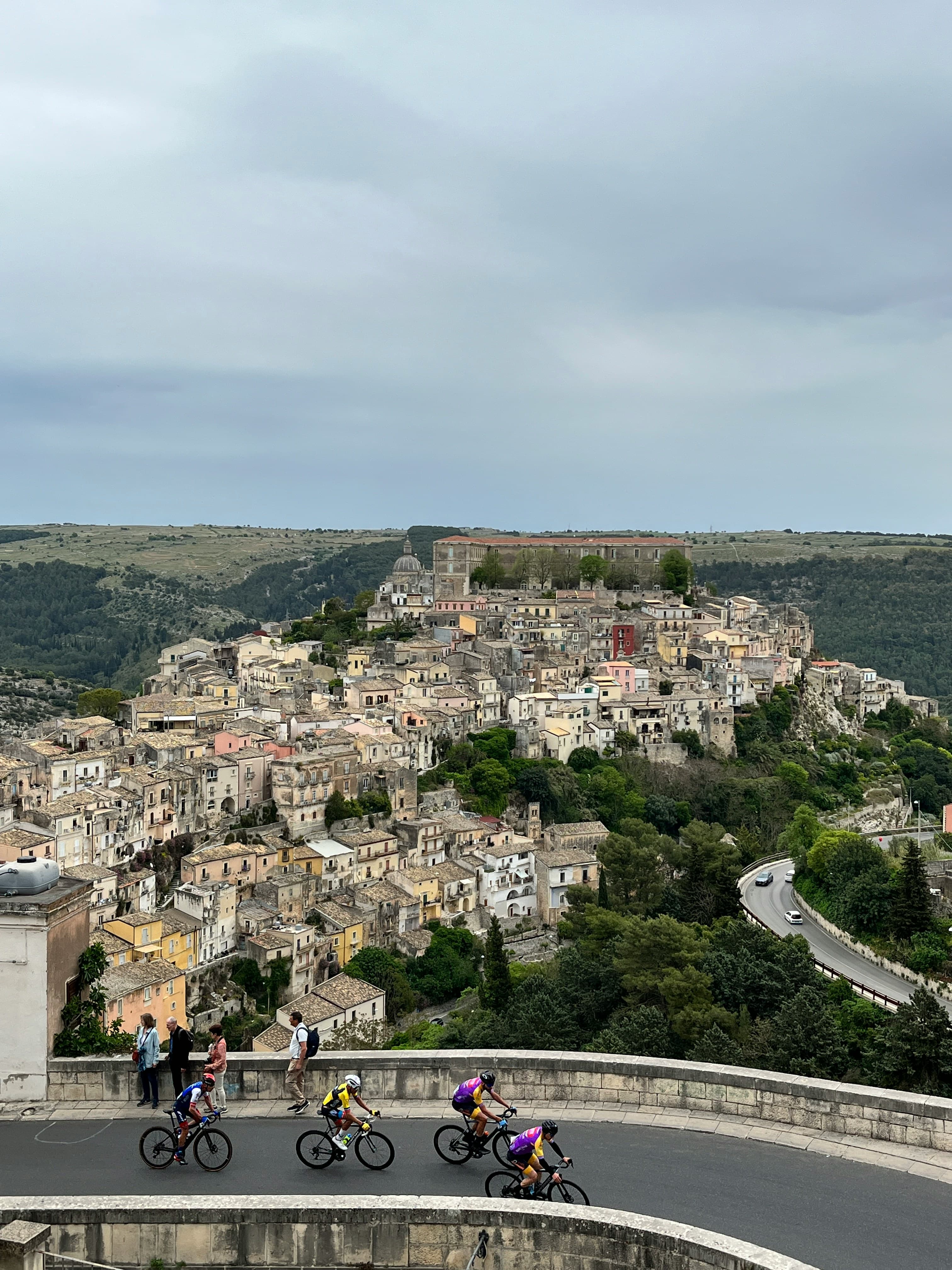
Photo: Italian hillside landscape — Unsplash
This is a Race the Route companion guide — pairing live race coverage with rideable destination guides for athletes.
The Blockhaus is not a famous climb because it is pretty. It is famous because it is hard. Where Mont Ventoux is steep on a wide, regular road, the Blockhaus is irregular in gradient, often steeper than 10%, and all on rough rural back roads that have you changing gear constantly. It is remote — a road up a mountain rather than a pass connecting two valleys — and you are more likely to meet deer, boar, and chamois on the way up than other cyclists.
That rawness is exactly why it deserves a place on your riding list.
Three Routes Up
Route 1: Roccamorice (the hardest) — The direct assault from the valley floor. Starting from Scafa, you climb to Roccamorice village and then tackle the old mule track directly to the summit. This is the route that features in the Giro and the one Vingegaard just conquered. The gradients are savage — 19km averaging 8.3% with long sections above 10%. For experienced climbers who want the full Blockhaus experience.
Route 2: Lettomanopello via Passo Lanciano — The longest route at 21.7km with 1,703m of vertical gain averaging 7.8%. You climb to Passo Lanciano (a small ski station) from the south side, then turn up toward the summit. The gradient is more consistent than Route 1, making it slightly more manageable despite the extra distance.
Route 3: Fara Filiorum Petri — The gentlest approach. You climb Passo Lanciano from its eastern side — a steadier, more forested road — before joining the final section to the summit. This is the best option for your first attempt.

The Must-Ride Section: Passo Lanciano to Summit
Whichever route you choose, the final 7km from Passo Lanciano to the Blockhaus summit is the defining section. The road narrows, the gradient steepens, and the landscape opens into the high, windswept plateau of the Maiella massif. There are no trees, no shelter, and no pretending you are anywhere other than alone on a mountain.
The road surface is rough — nothing like the smooth tarmac of the Stelvio or Alpe d'Huez. You feel every metre in your hands and your legs. The views, when you can lift your head, are extraordinary — the Adriatic Sea to the east, the Apennine ridge stretching north and south.
Connect with training partners, earn travel miles, and discover terrain worth crossing borders for.
Join ZealZagFollow us on InstagramGetting There and Logistics
Start point: Roccamorice or Lettomanopello, both accessible from Pescara (45 minutes by car). The nearest train station is Scafa.
Accommodation: Pescara on the coast is the best base — a proper city with hotels, restaurants, and bike shops. The mountain villages have limited options.
When to go: May through October. The road closes in winter due to snow. Early summer offers the best weather and the longest days. Avoid August heat — the exposed upper section has no shade.
What to know: Carry plenty of water — there are no services on the climb itself. The descent is technical with rough tarmac and tight corners. A compact chainring (34/32 minimum) is recommended.

Find Your Crew in Abruzzo
Abruzzo is one of Italy's most underrated cycling regions — dramatic climbs, empty roads, and a coastline for recovery rides. ZealZag athletes in Italy are discovering what the pros have known for decades: the Maiella massif is world-class terrain.
Read the Stage 7 race recap and explore our other Italian cycling content. For more Race the Route guides, see Stage 5: Potenza and Mont Ventoux.
Meet a ZealZag Athlete
Keep reading
Race the Route: Stage 8 of the 2026 Tour — Périgueux to Bergerac Through the Dordogne
Today's Stage 8 is a flat 180.4 km run from Périgueux to Bergerac through the Dordogne. Here's how to ride the same terrain the peloton races — and turn it into your own endurance session.
Race the Route: Riding the Col du Tourmalet Like the 2026 Tour
The 2026 Tour's first hors catégorie climb is a bucket-list ascent for any cyclist. Here's how to ride the Col du Tourmalet yourself — the numbers, the two approaches, and why you should do it with a local.
Tour de France 2026: The Tourmalet Awaits as Træen Defends Yellow Into the Pyrenees
A surprise leader in yellow, the favourites lying in wait, and the fabled Col du Tourmalet looming as the 2026 Tour's first hors catégorie test — the race for the mountains starts now.