Innsbruck Climbing World Cup 2026: Boulder Semis Light Up the Alps
By ZealZag Team
Innsbruck Climbing World Cup 2026: Boulder Semis Light Up the Alps
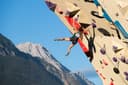
The Kletterzentrum Innsbruck's outdoor arena has a backdrop that no competition designer could fabricate: the Nordkette ridge — four peaks reaching 2,334 metres, rising 1,700 metres directly above the city — provides the kind of vertical context that keeps things honest at a climbing World Cup. The athletes competing here know what real stone looks like. It is above them every moment they are in this city.
The 2026 IFSC World Climbing Series has reached its midpoint at this Austrian alpine venue, and the competition has delivered what Innsbruck reliably delivers: technical bouldering that separates the world's best by centimetres, and lead qualifying scores tight enough that this week's outcomes will be decided in a final sequence.
Boulder Semifinals: Precision Under the Peaks
The Kletterzentrum's outdoor bouldering arena — a permanent structure with moveable panelling configured fresh for each event — hosted its third day of competition this morning. The boulder semifinals determined which eight men and eight women advance to Thursday's finals.
Toby Roberts (Great Britain) topped the third boulder problem in his semifinal block with the cleanest solution of the day: a compression sequence on an overhanging panel that rewarded body tension and opposing hip pressure over brute finger strength. The 20-year-old has been the consistent revelation of the 2026 World Series season, building a final-round presence that now looks less like a breakout and more like the new baseline.
His competition with Mejdi Schalck (France) and Tomoa Narasaki (Japan) is the defining thread running through the men's 2026 bouldering season. Narasaki — three-time world champion, now 30, still moving with the fluid precision that has made him the dominant climber of his generation — topped two of his four problems in the semifinal and took the session's highest cumulative score in the men's field. His placing in the final: assured.
In the women's boulder semifinals, Natalia Grossman (USA) continued the form that has made her arguably the most complete boulderer on the current World Series circuit. Three tops from four problems, zone on the fourth — her semifinal performance extended a podium record stretching back to 2022 and confirmed her Thursday final place. Hannah Schubert (Austria) delivered for the home crowd on the session's third problem: a technical sidepull sequence that had troubled the entire women's field, finding the match grip on her third attempt to set the session's top score on that problem. The Kletterzentrum crowd — knowledgeable, accustomed to watching elite competition in this arena — understood the significance of what they were watching.
Oriane Bertone (France), arriving in Innsbruck as a favourite following her silver at the Prague World Cup, topped three problems before stalling on the fourth: a dynamic compression problem where the starting position required full-body tension calibrated to absorb both strength and timing simultaneously. She advances to Thursday's final. Her facial expression at the problem base after the final buzzer was unreadable.
Lead Qualifying: Scores Still Settling
The lead wall at the Kletterzentrum — permanent, outdoor, reaching approximately 15 metres with a 50-degree overhang in the upper section — handled its Day 3 qualification rounds this afternoon. Lead climbing at the World Series level assesses a single route, six minutes on the wall, scored by the highest point reached. Qualification today set the top 26 men and women advancing to tomorrow's semifinals.
Alberto Ginés López (Spain), the Paris Olympic gold medallist in combined climbing, completed the qualification route to the top — one of three men to do so — earning shared first position in the men's lead qualification standings. Yannick Flohé (Germany) topped his route in the second session.
In the women's lead qualification, Jain Kim (South Korea) — 37 years old, still competing at World Cup level with a technical mastery that represents the lead discipline's highest expression — reached the second-to-last hold of the route. The Austrian crowd, well-versed in technical climbing assessment, understood what they were watching: a climber at 37 still producing high-level hangs on a competition overhang is something specific. Jessica Pilz (Austria), another home favourite whose relationship with this arena is built on years of competition here, qualified strongly with a top-five score. The reception when her result was posted approached the response to any non-Austrian performance of the day.
Connect with training partners, earn travel miles, and discover terrain worth crossing borders for.
Join ZealZagFollow us on InstagramThe Innsbruck Effect
There is a specific quality to climbing competitions held in alpine venues, and Innsbruck amplifies it. The athletes are surrounded by real mountains. The audience includes outdoor climbers who have spent time on the Nordkette's via ferrata routes and the Martinswand limestone above the Inn Valley — the overhanging rockface where Emperor Maximilian I famously became stranded during a chamois hunt in 1493.
The bouldering problems this week have reflected route-setting that understands this context. The third men's semifinal problem — the compression sequence that produced the day's most dramatic moments — was calibrated with the reference point of granite compression climbing: body tension, opposing pressure, no obvious hold sequence. The climbers who solved it first were those who stopped looking for grips and started treating the entire panel as a shape to control. That is outdoor climbing thinking applied to competition terrain. Innsbruck encourages it.
Remaining Schedule
- Wednesday June 18: Lead semifinals (men's and women's)
- Thursday June 19: Boulder finals — 8 men, 8 women competing for the podium
- Friday June 20: Para Climbing events
- Saturday–Sunday June 21: Lead finals
For athletes who want to experience the mountains that define Innsbruck's climbing culture — the Nordkette, the Martinswand, the Karwendel limestone — see our complete guide to climbing in and around Innsbruck.
Meet a ZealZag Athlete
Keep reading
Mirosław's Last Race Is in Krakow — and the Whole World Is Watching
The World Climbing Series returns to Krakow's UNESCO Main Market Square with a new format and an unmissable storyline: Aleksandra Mirosław, Olympic champion and world record holder, racing in her home city in what she has said will be her final competitive season.
Speed Climbing Comes to a UNESCO Market Square: Krakow World Cup Preview
The World Climbing Series arrives in Krakow's UNESCO Heritage Market Square for a speed-only World Cup that debuts a radical new four-lane race format. Zhao Yicheng owns the 4.58-second world record; Sam Watson and Veddriq Leonardo are here to take it back.
Krakow for Climbers: Polish Jura Limestone, Tatra Granite, and a UNESCO Old Town Base
Poland's best base city for outdoor climbing sits 25 kilometres from the limestone crags of the Jura and two hours from the granite of the Tatra Mountains — and its Old Town is one of Central Europe's best rest-day destinations.