World Climbing Series Bern Opens at Festhalle as New Era Begins
By ZealZag Team
The wall is the same. The athletes are the same. The competition format is the same. What changed in Bern this week is the name on the broadcast graphic.
The 2026 season opens its bouldering programme with the World Climbing Series Bern, a three-day event at the city's Festhalle that until last season was called the IFSC Climbing World Cup. The rebrand — announced over the off-season as part of a broader restructuring of competition climbing's governance — keeps everything athletes and fans recognise (qualification format, semi-final scoring, the four-boulder final round) and updates the surrounding identity. The first event under the new name happens to be a season opener for the boulder discipline, and the qualification list reads like a who's-who of the post-Paris generation.
Why the Rebrand
The shift from "IFSC Climbing World Cup" to "World Climbing Series" reflects an organisational decision to consolidate competition climbing under a single, athlete-facing brand. The technical body remains; the visual identity, the broadcast graphics, and the official communications now run under the new banner. For results-tracking purposes, the season points system continues uninterrupted — wins in Bern count toward the same World Climbing Series ranking that determines season seeding.
The change has been received quietly within the climbing world. Athletes have used the off-season to adjust sponsorship language and event references. Federations have updated their athlete handbooks. The visible difference at Festhalle on Friday morning was a new logo across the timing-board overlay and a different colour on the volunteer T-shirts.
The Festhalle as a Stage
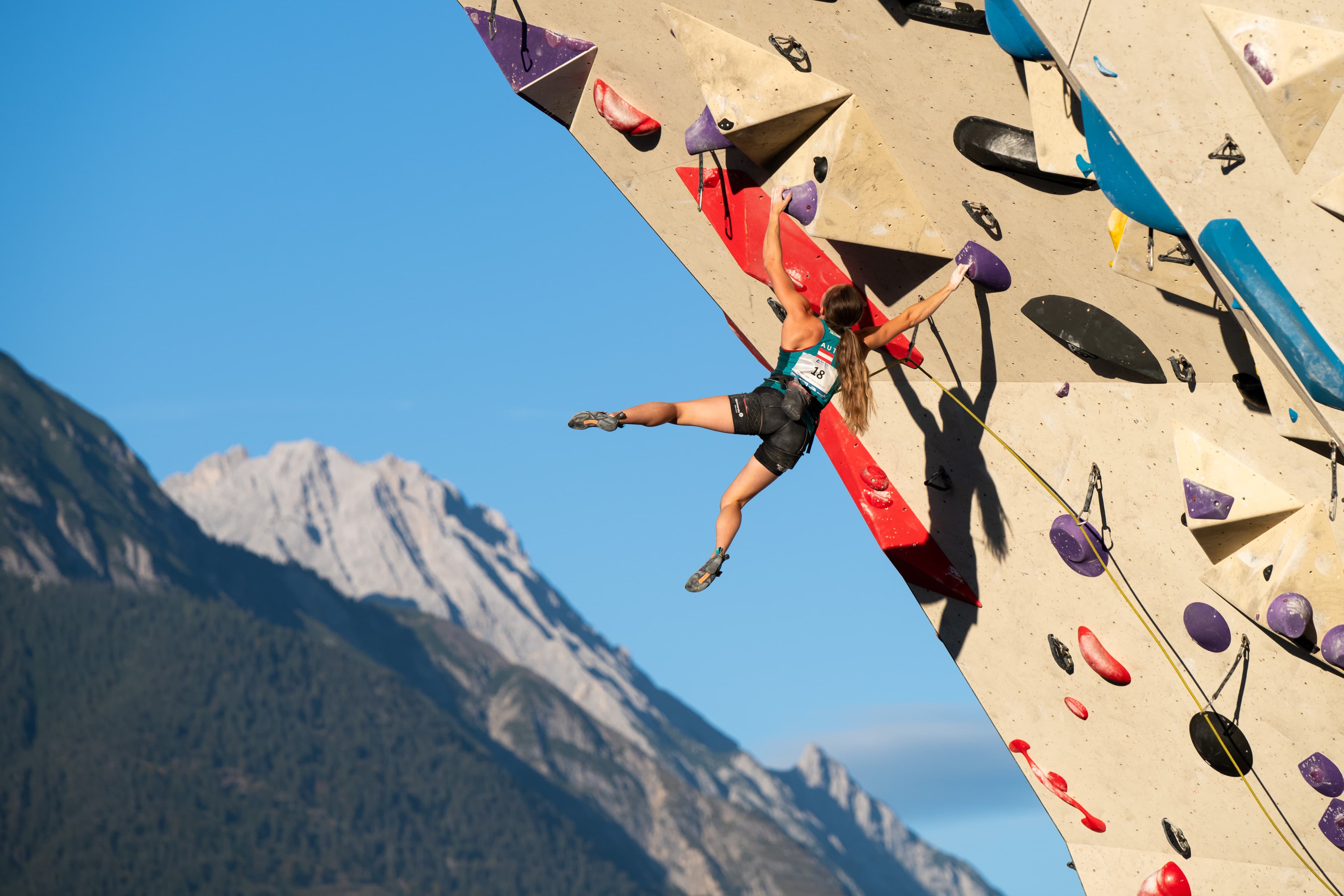
Bern's Festhalle is a purpose-built event hall on the city's northern edge, with a permanent climbing wall system installed for the annual competition since 2017. Capacity sits around 4,500 spectators, and the venue's design puts the audience close to the wall — the front rows are perhaps eight metres from the start holds. The route-setters arrived a week ahead of the event and assembled the qualification problems through Wednesday and Thursday, with the final wall reveal happening Friday morning before the women's session.
For athletes, Festhalle is a known quantity. The wall texture, the volume library, the lighting — most of the season's top competitors have climbed this venue at least twice. That familiarity sharpens the qualification field. There are no excuses about unfamiliar surfaces. The result is a session where the technical difference between the best six or seven athletes per gender often comes down to body position and reading time, not raw strength.
Connect with training partners, earn travel miles, and discover terrain worth crossing borders for.
Join ZealZagFollow us on InstagramQualification Day
The women's qualification opened at 09:00 local time on Friday. The morning session typically draws a smaller crowd, with athletes' families and a dedicated core of Swiss bouldering fans in the front rows. The route-setters split the qualification field across five problems, balancing power moves, coordination, and the slab problem that has become a Bern signature in recent editions. The slab — usually a low-friction smear test with a final volume catch — is the problem that historically defines who advances and who goes home Friday night.
The men's session followed at 15:30, with the broader Bern public arriving for the late-afternoon and evening. Two of the five men's qualification problems were set with the kind of single-move power tests that suit the next-generation Japanese climbers; the other three carried more compression and coordination DNA. Semi-final qualifying requires top finishes across the field, with athletes' best three problems counting toward the cut.
What to Watch
The semi-finals and finals on Saturday (women) and Sunday (men) will tell the season's first real story. World Climbing rebrand or not, the boulder format remains brutal: four problems, four minutes per problem in finals, the scoring weighted toward tops over zones. Athletes who emerged from a strong qualification carry psychological momentum into the next round, but Bern has produced enough upsets over the years that nothing is settled until Sunday night.
For an athlete travelling from the region, this is the weekend to be in Bern. The Swiss bouldering scene's depth means the city's training gyms — Magnet, Minimum, Bouldair — run extended public hours during the competition week, and the post-event atmosphere is famously loose.
Looking Beyond Bern
Two further bouldering events follow in close succession over the next ten days: the Boulder World Cup in Salt Lake City (May 23–25) and the European mid-season climbs that follow. The 2026 season's bouldering arc is short and dense, with the World Championships looming in late August.
For now, though, the focus is here. Three days of bouldering at Festhalle Bern. A new name on the broadcast. The same wall.
For training destinations to extend the trip, see our Switzerland bouldering destinations guide. For last week's Slovak boulder event, read our Liptovský Mikuláš field report.
Meet a ZealZag Athlete

Keep reading
Speed Climbing Comes to a UNESCO Market Square: Krakow World Cup Preview
The World Climbing Series arrives in Krakow's UNESCO Heritage Market Square for a speed-only World Cup that debuts a radical new four-lane race format. Zhao Yicheng owns the 4.58-second world record; Sam Watson and Veddriq Leonardo are here to take it back.
The Long Way Up
From World Cups to the limestone walls Julia Fišer discovered that the greatest climbs are not always the ones that take you higher
Tour de France 2026: The Tourmalet Awaits as Træen Defends Yellow Into the Pyrenees
A surprise leader in yellow, the favourites lying in wait, and the fabled Col du Tourmalet looming as the 2026 Tour's first hors catégorie test — the race for the mountains starts now.