Racing Tokyo Marathon: What International Runners Actually Need to Know
By ZealZag TeamThe Tokyo Marathon runs on the first Sunday of March. It became one of the six World Marathon Majors in 2013 and remains the only Major in Asia. The course starts at the Tokyo Metropolitan Government Building in Shinjuku — on the western side of central Tokyo — and finishes in Marunouchi near Tokyo Station, 42.195 kilometres later. The elevation profile is essentially flat: a net change of around 35 metres over the full distance, designed for performance.
The race draws an international field of approximately 38,000 runners, but the application-to-acceptance ratio for the general lottery has historically been well below 10 percent for overseas applicants. Getting in is its own logistics challenge, and for many runners the planning starts a year or more before race day.
Getting Entry
The standard overseas lottery application opens on the official Tokyo Marathon website in July or August for the following March race. Applications are submitted online; results are communicated by email in August or September. The process is straightforward to navigate in English; the acceptance rate is not.
If the general lottery doesn't come through:
Charity entries are available through the official Tokyo Marathon Foundation's charity programme. These require a minimum fundraising commitment — the threshold and partner organisations are listed on the official website each cycle. The amount varies year to year but has historically been in the range of ¥100,000 to ¥150,000 raised.
Travel package entries are offered by a handful of Japan-based and international sports travel operators who hold guaranteed-entry allocations. These bundles typically include race entry, a defined hotel package, and sometimes expo transfer. The premium over standard entry is real but not extreme, and for runners who want certainty and prefer the logistics to be handled, these are a legitimate route in.
Time qualifiers: Tokyo maintains performance standards for faster runners. The current standards are published on the official website and are updated periodically — check directly rather than relying on information from previous years.
No bib transfers are permitted between runners once registration is confirmed.
Flights and Arrival
Tokyo Haneda Airport (HND) is preferred over Narita (NRT) for race-trip logistics. Haneda sits roughly 20 kilometres from central Tokyo with two direct rail options: the Tokyo Monorail to Hamamatsucho (around 25 minutes) and the Keikyu Line to Shinagawa (around 10 minutes). Narita is 60–90 minutes from central Tokyo depending on rail option and destination station.
Arrive at least four to five days before race day. Jet lag deserves serious planning: Tokyo is UTC+9. From London in early March, this is a nine-hour eastward shift. From New York (UTC-5), 14 hours. Eastward travel is widely regarded as harder on circadian adjustment than westward. Arriving Thursday or Friday for a Sunday race means two or three days of adjustment — possible, but thin margin for a race you've potentially waited a year to enter. Arriving Monday or Tuesday gives you a more comfortable buffer.
On arrival: get onto local time immediately. Resist napping in the afternoon regardless of how you feel. Seek morning daylight — Japan in early March delivers clear morning sun reliably. If you arrive pre-dawn, wait until natural light before sleeping again.
Connect with training partners, earn travel miles, and discover terrain worth crossing borders for.
Join ZealZagFollow us on InstagramPre-Race Logistics: The Expo
The Tokyo Marathon Expo (Marathon Messe) is held at Tokyo Big Sight, the convention centre in the Odaiba waterfront district, on the Friday and Saturday before race Sunday. Bib collection is mandatory at the expo. There is no race-day bib pickup option. You must attend in person.
Tokyo Big Sight is accessible by Rinkai Line train from Shin-Kiba, or by the Yurikamome automated guideway from Shimbashi. Budget 30–45 minutes of travel time from hotels in Shinjuku or central Tokyo, plus queuing and walking time inside the venue. Friday afternoon is faster than Saturday; Saturday afternoon is the worst window. Go Friday if your schedule allows.
At collection you receive your race bib (with timing chip already attached), finisher T-shirt, and the official race guide. The guide is dense with logistics you need to absorb before race morning — specifically: start block colour, bag-drop truck assignment by bib number, the prohibited items list, and the on-course medical procedure. Read it the same day you collect it.
Race Morning
Bag drop and the start area are in Shinjuku. Most central Tokyo hotels are 30–45 minutes away by rail. Given race-morning train volume and the time needed to reach your bag-drop truck by bib number, aim to arrive at the start area by 07:45–08:00 for a 09:10 race start.
Your checked bag is transported by truck from the start to the finish area in Marunouchi. It is locked in after bag-drop closes; you will not access it again until you collect it after finishing. Pack your post-race kit thoughtfully: change of clothes, IC card for rail travel home, cash, phone charger, and any medication. The bag will be waiting for you — or can be collected from a numbered claim area — after you cross the line.
Corrals are assigned by expected finish time, designated by colour, and enforced. You cannot move to a faster corral than your assignment. Pace yourself accordingly; corral assignment reflects legitimate time standards and crowding in the faster groups is real.
On the Course
Aid stations appear approximately every 2.5 kilometres from kilometre 5 onward. Each station carries water and a Japanese-brand isotonic drink. Gel stations appear at multiple points from kilometre 25 onward. The gels are a domestic brand — not commonly sold outside Japan. If you are particular about your mid-race nutrition, bring your own from home and supplement with on-course drinks only.
Crowd support along the course is consistent but characteristically Japanese in register: enthusiastic in presence and restrained in volume. Asakusa, around kilometre 15, and the Ginza shopping district stretch around kilometre 25 draw the densest spectator lines. If you are accustomed to the volume of London or Chicago, Tokyo feels quieter — some runners find it calming, others find it harder to read their own effort without external noise.
There are no Special Needs bags at Tokyo. Whatever you require mid-race, you carry from the start or access via on-course stations only.
Japan-Specific Practical Notes
IC card (Suica or Pasmo): load one with ¥3,000–5,000 before race weekend. This covers all rail travel and is accepted at 7-Eleven, FamilyMart, and most convenience stores. Loading is possible at any major station fare machine and at many airport kiosks. Cards from international visitors can be loaded and used without a Japanese bank account.
Cash: Japan is increasingly card-friendly, but some smaller restaurants and accommodation options near Peniche still expect it — wait, Tokyo. Some older ramen shops, standing bars, and neighbourhood restaurants around Shinjuku operate cash only. Carry ¥5,000–10,000 as backup. ATMs at 7-Eleven and Japan Post reliably process international debit and credit cards.
Convenience stores serve as the practical backbone of the race weekend: 7-Eleven, Lawson, and FamilyMart are everywhere and open 24 hours. For post-race nutrition, the onigiri, drinks, and hot foods available at any konbini near the finish area are superior to most Western race-day food tent offerings. Stock your post-race bag with this option in mind.
Medical support: very thorough and high-frequency. Race officials pull runners from the course when safety thresholds are met. If you are stopped, the care is competent and English is available at medical points. Communicate any conditions or medications on the race registration form; the information is shared with on-course medical staff.
The Finish
The finish chute is in Marunouchi, near Tokyo Station. Post-finish recovery areas lead to medal and T-shirt collection, then to the baggage claim zone. The area between finish and bag retrieval can involve 30–40 minutes of walking in race kit depending on your finishing position in the field. Dress for this: cold weather in early March in Tokyo is real (typical highs of 8–12°C, with early morning starts colder), and finishing athletes in compression-only shorts waiting in a 10-minute bag queue will be cold.
Allow an unscheduled evening after the race. Post-race Tokyo — ramen, a hotel onsen if your accommodation has one, or even just sitting in a 7-Eleven eating yakitori and watching the city — is a reasonable end to a race that most runners have spent 12 months planning for.
Meet a ZealZag Athlete

Keep reading
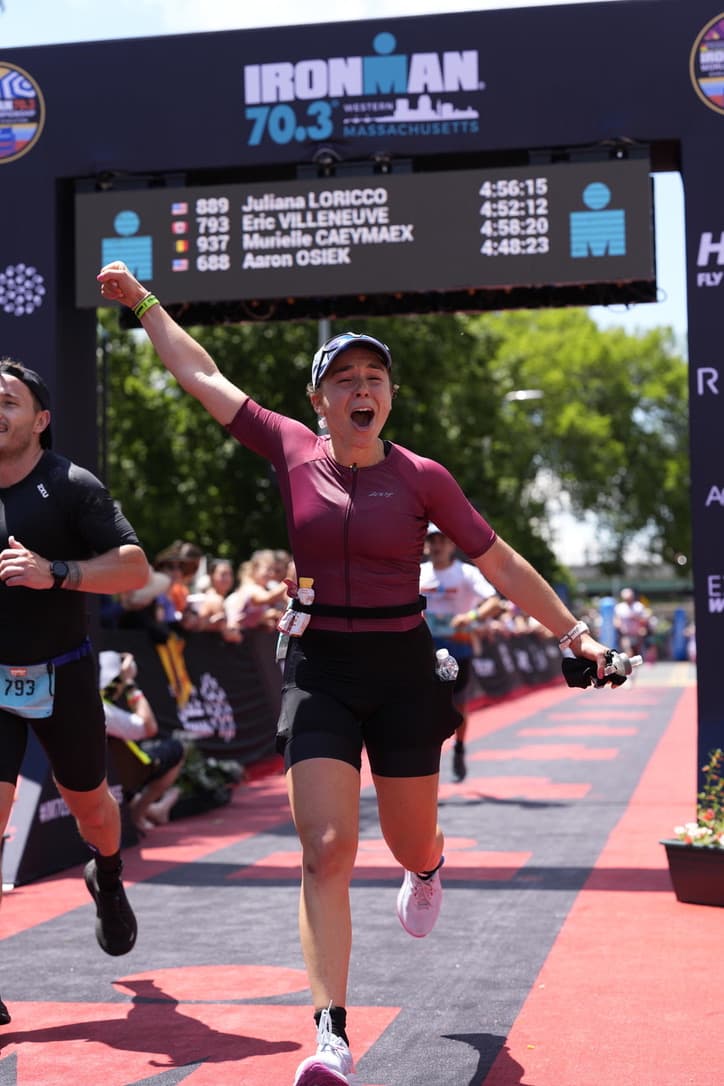
Running in Purple
A Law Student’s Journey Beyond the Finish Line.
Road Running Shoes: What the Categories Actually Mean and How to Choose Between Them
The road running shoe market has fractured into distinct categories over the last decade, driven largely by carbon plate technology. Understanding what each category is built to do — and what it is not — prevents expensive mistakes and, more importantly, prevents buying race-day performance at the expense of training health.
Gear Up and Ship Out: The Logistics of Getting Your Kit to an International Adventure Race
Adventure racing asks you to navigate across terrain you have never seen, by foot, bike, and paddle, for anything from 24 hours to ten days. Getting your equipment from your home to the race start in another country involves a logistics challenge that experienced teams treat as seriously as the physical preparation. Here is what that actually involves.