The Easy Run Problem: Why 80% of Your Marathon Training Should Feel Almost Too Slow
By ZealZag TeamThe most common training mistake among recreational marathon runners is not too little volume. It is too little easy running. Most people who run four or five days per week are running at a moderate-effort pace on the majority of those days — not easy enough to be genuinely recoverable, not hard enough to produce the high-intensity adaptations that interval training generates. The effort range that produces this plateau is sometimes called the "grey zone" or, less charitably, junk miles.
The implication is not that you need to train harder. It is that you need to train easier on easy days, and reserve genuine effort for the sessions designed to demand it.
The Intensity Distribution Research
Norwegian sport scientist Stephen Seiler has published extensively on how elite endurance athletes — across running, cycling, rowing, and cross-country skiing — distribute training intensity. His analysis of competitive endurance athletes consistently finds that approximately 80% of sessions are conducted at low intensity (broadly, aerobic Zone 1–2, where conversation is easy and breathing is nasal) and roughly 20% at high intensity (Zones 4–5, where sustained speech is not possible). The middle zone — the moderate-hard effort that recreational athletes often default to — appears minimally in elite athlete training logs.
This pattern, sometimes called polarized training, is not universal among researchers, and the evidence base in recreational (rather than elite) populations is more limited. But the directional insight holds for most road runners: if all your runs feel similar — moderately hard, needing mouth breathing after the first kilometre, leaving you mildly fatigued but not destroyed — you are probably running too many of them in the grey zone.
What Easy Actually Means
The most accurate personal test for easy running pace is the talk test: you should be able to speak full sentences without a noticeable breath interruption. Not isolated words. Full sentences. If you are pulling in a breath between every five or six words, you are above easy pace.
Heart rate provides a more objective reference. A commonly used approximation for easy aerobic running places the target at roughly 65–75% of maximum heart rate, though individual variation in this relationship is significant. The maximum heart rate formula (220 minus age) is only a population average with wide individual scatter; if you have access to a recent lab test or a well-executed field test, use that number instead.
What easy pace feels like varies enormously between individuals and depends on fitness. A runner who is genuinely fit and running at easy pace will often be surprised how slow that pace is relative to what they think of as "normal" running effort. This is the point. Easy pace should feel, to an outside observer, like you are not trying. That feeling is accurate.
Connect with training partners, earn travel miles, and discover terrain worth crossing borders for.
Join ZealZagFollow us on InstagramBuilding the 16-Week Marathon Block
A 16-week marathon training framework oriented around the polarized model looks broadly like this:
Weeks 1–8: Base building
Three to four easy runs per week. One long run — the cornerstone of marathon preparation — conducted at easy pace throughout. The long run builds from approximately 14–16km in week one, adding 2–3km most weeks, with a step-back week every third or fourth week where total distance drops by 20–25%.
One quality session per week: tempo intervals (lactate threshold effort — sustainable but hard, roughly 10k to half-marathon race pace), or aerobic intervals (5 x 1000m at 5k pace with full recovery). One quality session per week is sufficient for most recreational marathon runners in the base phase.
Weeks 9–14: Build phase
Long run reaches 29–32km at the peak. Weekly mileage is higher. One or two quality sessions per week depending on recovery capacity. The second quality session, if included, should be shorter and lower intensity than the primary one — not two hard sessions of equal demand.
Back-to-back weekend runs (a quality or medium-long run on Saturday, the long run on Sunday) simulate the accumulated fatigue of marathon-paced racing better than any single session. This is particularly valuable in weeks 10–13 before the taper begins.
Weeks 15–16: Taper
Training volume drops sharply — commonly by 30–40% in week 15, another 20–30% in race week. The quality sessions remain but get shorter. The purpose of the taper is consolidation: the body absorbs training stress from the preceding months, muscle glycogen stores normalise, and minor fatigue clears. Most runners feel terrible in the first week of taper, convinced they are losing fitness. They are not. This feeling is normal and the research on taper supports its role.
The 10% Rule
The guideline that weekly mileage should not increase by more than 10% between consecutive weeks is widely cited in running training literature as a rough injury-prevention heuristic. It is a population-level observation rather than an individual prescription — some runners can increase faster, others need slower build-up. But as a default, especially in the base phase, it is a reasonable constraint for athletes new to structured marathon training.
More important than the week-to-week percentage: do not sacrifice the step-back weeks. Three weeks of load followed by one lower-volume week lets the body adapt before the next build. Many runners skip step-back weeks when they are feeling good. The injury pattern that follows several months later is a reliable consequence.
What to Do With the Hard Sessions
Two session types produce most of the high-intensity adaptation for road running.
Tempo running: sustained effort at or slightly above lactate threshold — approximately 10k to half-marathon race pace for most recreational athletes. Classic formats include one continuous 20–40 minute tempo run, or broken tempo intervals (3 x 10 minutes at tempo pace with 2-minute recovery jogs). Tempo training improves lactate clearance and extends the pace you can sustain for longer durations.
VO2max intervals: shorter, higher-intensity repetitions at roughly 5k race pace, with recovery intervals between. Classic format: 5 x 1000 metres at 5k pace with 2–3 minutes of easy jogging recovery between each. These sessions are genuinely hard — they should feel hard. One per week is enough for most training blocks; two per week requires careful management of recovery.
The common error is making tempo sessions too fast (they become intervals) or too slow (they drift into the grey zone). Tempo effort should feel controlled but uncomfortable — you can hold it but would not want to for much longer. If you finish a tempo session feeling like you had significantly more to give, you ran it too conservatively. If you are completely destroyed, you ran it too hard.
Races as Training
Most marathon training blocks include one or two tune-up races: a half-marathon in weeks 10–12, or a 10k in weeks 8–10. These serve dual purposes: they provide a competitive context that laboratory efforts replicate poorly, and they give a current performance data point for adjusting goal marathon pace. Arrive at a tune-up race reasonably fresh — do not schedule it the week after your peak mileage — and run it hard. The result is information.
The Day Before the Long Run
Long runs teach the body to use fat as fuel at increasing intensities and build the capillary density and mitochondrial adaptations that sustain marathon pace for 42 kilometres. They only work if you arrive at them adequately fuelled. Carbohydrate intake in the 24 hours before a long run — specifically the dinner and breakfast on the day before and morning of — matters more than on any other training day. Under-fuelled long runs degrade into survival exercises and do not produce the training stimulus they are supposed to.
Practise your race-day fuelling on long runs. The gel or chew you plan to use at every aid station in a marathon should be tested repeatedly in training, at race pace, before it appears in competition. Gut responses to carbohydrate at running intensity vary between individuals and need to be established before the start line.
Keep reading
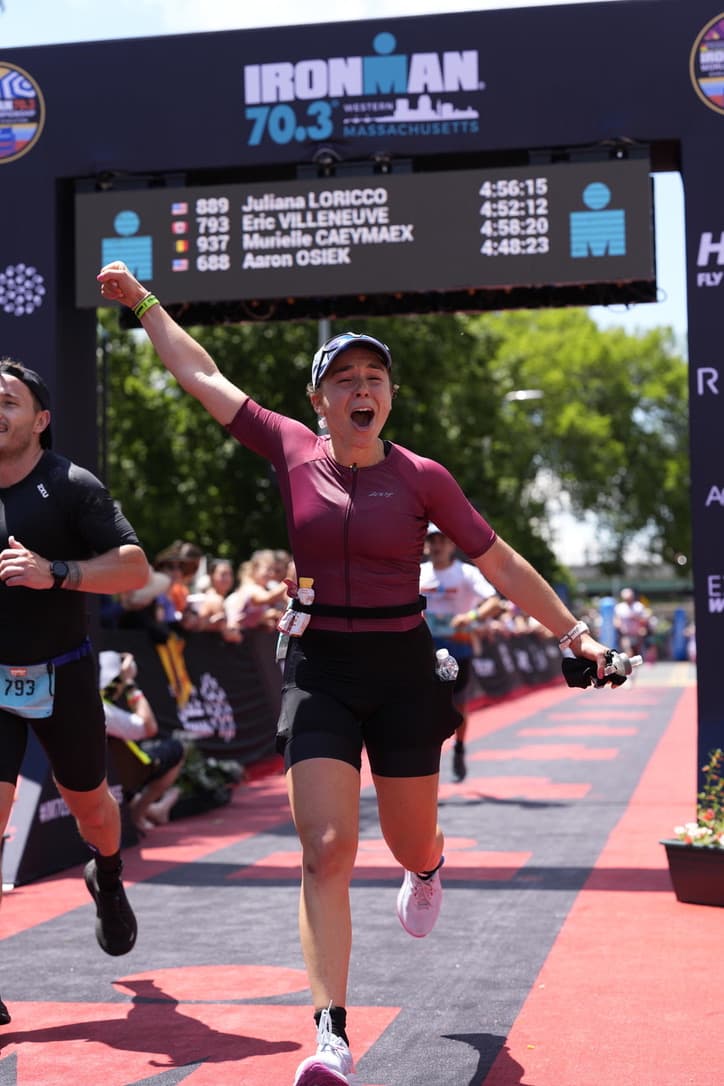
Running in Purple
A Law Student’s Journey Beyond the Finish Line.
Road Running Shoes: What the Categories Actually Mean and How to Choose Between Them
The road running shoe market has fractured into distinct categories over the last decade, driven largely by carbon plate technology. Understanding what each category is built to do — and what it is not — prevents expensive mistakes and, more importantly, prevents buying race-day performance at the expense of training health.
Your First Multi-Day MTB Stage Race: What the Training Actually Looks Like
Stage racing on a mountain bike is a different discipline from a single hard event. The training is different, the equipment choices are different, and the in-race decisions that determine whether you finish comfortably or blow up on day three are different. Here is the framework that experienced stage racers actually use.