Racing Across Time Zones: How to Manage Jet Lag Before a Destination Marathon
By ZealZag TeamTraining for a marathon is four to six months of structured work. Flying to race one can undo a meaningful portion of it in 24 hours if the travel is poorly managed.
Jet lag is not tiredness from a long journey. It is a misalignment between your internal circadian clock and local time at your destination, affecting sleep quality, hormonal release timing, thermoregulation, perceived exertion, and gut function. Athletes who dismiss it as an inconvenience and simply "push through" are racing a physiological system that is not optional.
What Jet Lag Actually Does
Your circadian system governs more than sleep. Cortisol peaks in the early morning, supporting alertness and readiness for exercise. Core body temperature rises through the afternoon, correlating with peak physical performance for most people. Melatonin release in the evening drives sleep onset and overnight recovery. When you land across multiple time zones, these rhythms are still tuned to your departure location.
The practical consequence: if your race starts at 8 am local time but your circadian clock believes it is 2 am, cortisol is suppressed, core temperature is low, and your metabolic system expects sleep rather than 26.2 miles at threshold pace. Perceived effort at a given speed is measurably higher in this state. Sports physiology research consistently shows that peak performance for most people occurs in the mid-to-late afternoon — a fact reflected in the timing of most world record marathon performances, which tend to be set at evening events in spring or autumn.
Eastward Travel Is Harder Than Westward
Direction of travel matters. Flying east — London to Tokyo, Sydney to Berlin — requires advancing your sleep phase. Your body resists this more than it resists delaying it. Westward travel shifts your clock later, which most people find more natural: staying up later is easier than falling asleep earlier.
A practical estimate: the circadian system adapts roughly one hour per day with eastward travel, and one to one-and-a-half hours per day westward. This is a generalisation — individual variation is significant — but it is a useful planning baseline. An athlete flying from Auckland to London (ten to eleven hours ahead) faces a theoretical ten-day full adaptation period. A week of pre-race time in London gets you most of the way there if managed well; three days does not.
Connect with training partners, earn travel miles, and discover terrain worth crossing borders for.
Join ZealZagFollow us on InstagramArrive Early Enough
The non-negotiable foundation is lead time. One full day of recovery per time zone crossed is the commonly cited minimum, and it is genuinely a minimum rather than an ideal. For trips involving more than five time zones, plan for at least seven days in the destination before race morning if competitive performance is the goal.
Athletes travelling from Australia to the Boston Marathon (US Eastern time, thirteen to fifteen hours behind depending on Australian state) who are chasing qualifying or age-group placements should arrive twelve to fourteen days before race day. Athletes travelling within Europe for a one- or two-hour time difference can often get away with arriving three days before.
The strategic question on arrival: stay on home time or switch immediately to local time. For small displacements — one or two hours — staying on home time and adjusting meals gradually can work. For larger differences, switch to local time on arrival day. Every hour you spend running on home time is an hour of adaptation you are not accumulating.
Light Exposure
Light is the primary input for circadian resetting. The retina detects morning sunlight and uses it as the dominant signal for advancing the body clock. Evening light delays it. Using this deliberately:
For eastward travel (need to advance your clock): Get outdoors in the morning as early as possible after arrival. Run or walk in daylight in the morning regardless of how tired you feel. Avoid bright overhead light and screens in the two hours before local bedtime. Blackout curtains matter — request them or bring a sleep mask. Even partial exposure through hotel windows at the wrong time can slow adaptation.
For westward travel (need to delay your clock): Seek light in the late afternoon and evening of your arrival day. Stay up until at least 10 pm local time even if you are exhausted. This is harder on the body short-term but accelerates adaptation. Morning light on the first day or two should be delayed where possible — sleeping through a bright window is working against you.
Melatonin: What It Does and Does Not Do
Low-dose melatonin (0.5 mg to 3 mg) taken at local bedtime can support sleep onset when your internal melatonin release is mistimed. It does not reset the circadian clock at these doses, but it helps bridge the gap between your body's delayed melatonin signal and local sleep time.
In the US and Australia, melatonin is available over the counter. In the UK and most of Europe, it is prescription-only for adults or available in supplement form at low doses. Athletes should consult a sports medicine physician before adding melatonin to their race preparation, particularly if they are already using other supplements or medications.
Avoid doses above 3 mg: the sedative effect increases without a proportional improvement in circadian shifting, and morning grogginess becomes a problem.
Running in the New Time Zone
The taper phase most athletes are in on arrival is not an excuse to become sedentary. Short, daily runs at the actual race start time are the most sport-specific form of circadian priming available. If your race starts at 8 am, do your pre-race shakeouts at 8 am local time in the days before the event. The combination of exertion, light exposure, and meal timing around those runs helps signal your body to expect physical effort at that hour.
Avoid long or intense sessions in the first two days after arrival. The goal is locomotion and daylight exposure, not fitness maintenance.
Eat at local mealtimes from arrival day. Meal timing is a secondary circadian cue — weaker than light but meaningful. Skipping meals or eating at home-time intervals slows adaptation marginally.
Alcohol on the outbound flight and the first two nights at the destination disrupts sleep architecture and slows adaptation. Save it for the post-race celebration.
Notes on Specific Major Marathon Destinations
Tokyo Marathon (March, 9:10 am start): A top-six Abbott World Marathon Major. For UK and European athletes eight to nine hours behind Japan Standard Time, arrive nine to eleven days before race day for competitive preparation. Tokyo's infrastructure handles international athletes well — the parks and riverside paths in central Tokyo are suitable for structured shakeout runs, and race-week support is comprehensive.
Boston Marathon (April, wave starts from 9:02 am): Race morning requires leaving your hotel at 6:30 am or earlier for bus transport to Hopkinton. For European athletes five to six hours ahead of US Eastern time, a week's lead time is the minimum. For Australians and New Zealanders (fourteen to fifteen hours behind), two weeks in the Boston area is the competitive standard. The early departure adds a layer to the morning logistics that jet-lagged athletes — already awake before they want to be — can find unexpectedly difficult.
Berlin Marathon (September, 9:15 am start): Largely straightforward for European athletes. US East Coast athletes, six hours behind, benefit from four to five days' lead time. The flat Berlin course rewards even pacing from the first kilometre — arriving underadapted and starting conservatively is a race-finishing strategy but not a time-optimal one.
Chicago Marathon (October, 7:30 am start): The early start is the complication. Athletes from Europe find that 7:30 am local time corresponds to early-to-mid afternoon at home — which may actually feel like peak-performance hours if acclimatisation is incomplete. Some European athletes have reported unexpectedly good early performances precisely because their body believed it was 1:30 pm rather than 7:30 am. This quirk is not a substitute for adaptation, but it is worth knowing.
London Marathon (April, elite wave 9:10 am, mass start 10:00 am): North American athletes three to five hours behind UK time generally adapt within three to four days. For athletes from Asia or Australia, treat London as equivalent in displacement to Tokyo in reverse.
The Minimum Viable Plan
If you can only do one thing: arrive as many days before your race as you can afford, switch to local time on arrival day, get daylight exposure in the morning from day one, and run your shakeouts at the actual race start time. That sequence does more than any supplement or biohacking protocol for the same cost in disruption.
Everything else — melatonin, light therapy glasses, caffeine timing, hydration strategies on the flight — is marginal improvement on top of those foundations.
Keep reading
Road Running Shoes: What the Categories Actually Mean and How to Choose Between Them
The road running shoe market has fractured into distinct categories over the last decade, driven largely by carbon plate technology. Understanding what each category is built to do — and what it is not — prevents expensive mistakes and, more importantly, prevents buying race-day performance at the expense of training health.
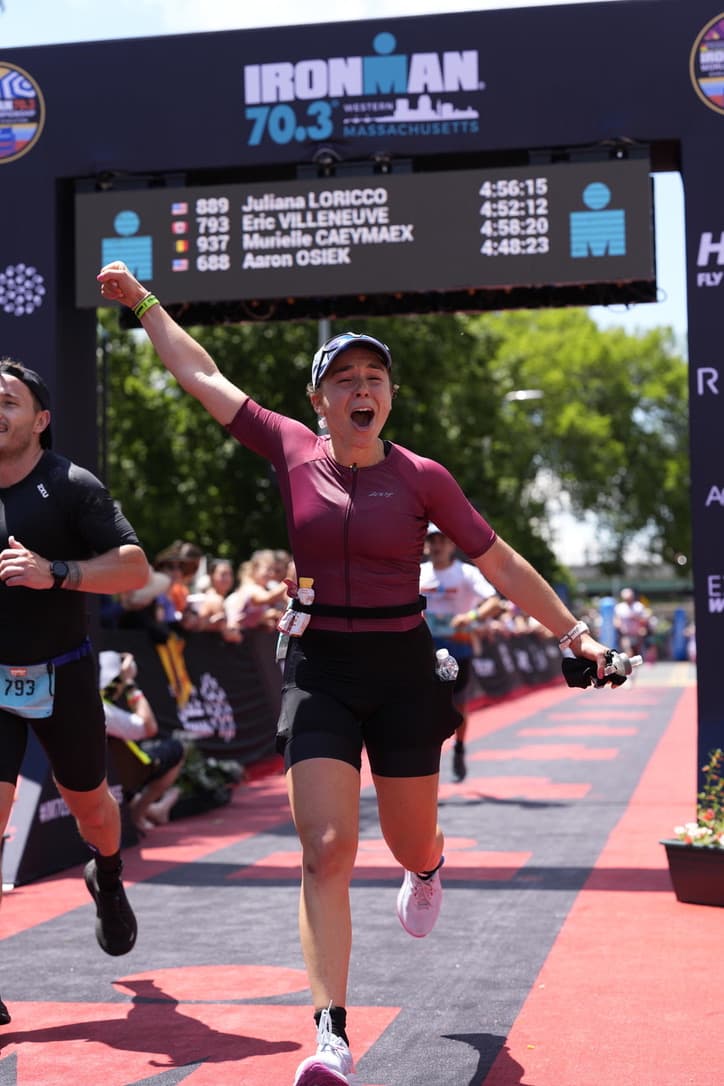
Running in Purple
A Law Student’s Journey Beyond the Finish Line.
Your First Multi-Day MTB Stage Race: What the Training Actually Looks Like
Stage racing on a mountain bike is a different discipline from a single hard event. The training is different, the equipment choices are different, and the in-race decisions that determine whether you finish comfortably or blow up on day three are different. Here is the framework that experienced stage racers actually use.