Flying to Race: The Practical Logistics of Competing in an International Marathon
By ZealZag TeamRacing a major marathon abroad looks different on a finish-line photo than it does at 05:45am when you're looking for an open coffee shop near your hotel before road closures start. The logistics of travelling to a major international marathon — registration windows, in-person bib collection, jet lag on an early-morning start schedule, race-day transport, and post-race departure timing — have specific failure modes that catch first-time international runners off guard.
Getting In: Registration Reality
For the six Abbott World Marathon Majors (Tokyo, Boston, London, Berlin, Chicago, New York), entry requires more forward planning than most international athletes expect.
Tokyo uses a general ballot for international applicants, typically opening each April for the following March race. Acceptance rates through the general ballot are low; applications from outside Japan compete in a separate international pool. Alternatives include charity entry (significant fundraising commitment, typically ¥200,000 or more) and tour operator packages that include guaranteed bib access. The registration portal is at marathon.tokyo — the international entry process runs separately from the domestic lottery and deadlines are strict.
Boston requires a qualifying time run at a certified marathon within a rolling qualification window. Standards are adjusted by age group and gender; the qualification time is not a guarantee of entry — due to oversubscription, accepted runners typically need to beat their standard by several minutes. The current qualifying standards and the qualification window are published at baa.org.
London runs a general ballot opening in October or November for the following April race, with a separate international category that sometimes offers marginally better odds for overseas applicants. Charity entry typically requires a fundraising minimum in the range of £2,000–£3,000 through an official charity partner.
Berlin and Chicago both operate ballots, with results typically announced approximately one year before race day. Berlin's ballot window fills extremely quickly — applications have historically closed within days of opening on the official site at berlin.marathon.com.
New York uses a lottery with improving odds for applicants who have applied unsuccessfully in previous cycles. Non-US residents can access guaranteed entry through official NYRR international tour operators.
For any of the major six, plan two to three years ahead on your first application cycle. Entry is not a given in any single year.
Race Expo and Bib Pickup
For virtually all major international marathons, bib collection is mandatory in person at the race expo, held at a convention centre or dedicated race village in the 2–3 days before race day. You cannot collect another runner's bib; you cannot have it mailed.
Tokyo requires a valid passport at bib collection. London recommends booking a specific time slot in advance to avoid the peak crowds. The expo itself typically occupies a large space with sponsor booths, gear vendors, and official merchandise — plan 60–90 minutes for the practical tasks of bib collection and any mandatory kit check, then leave. Standing for three hours walking the expo floor the day before a marathon is not a recovery activity.
At some smaller international marathons, early package pickup (a day or two before the standard expo opening) is available for travel reasons — check the race website and email the race organiser if your flight schedule makes the standard expo window difficult.
Connect with training partners, earn travel miles, and discover terrain worth crossing borders for.
Join ZealZagFollow us on InstagramJet Lag and Early Start Times
Most major marathons start between 08:00 and 09:30 local time. For athletes crossing more than four time zones to reach the start, this is the most consistently underestimated preparation challenge.
The general guideline — one day of adjustment per time zone crossed — makes a full week the minimum useful runway for a transatlantic move. This is often impractical with work and race commitments. A more realistic approach for a seven-hour time difference (US East Coast to Central Europe):
Arrive five to seven days before race day if possible. On arrival, adjust meal times to the local schedule immediately — do not eat on home-country time. Use morning light exposure to anchor the new waking time: get outside between 07:00 and 09:00 local time in the first three days, even if it requires discipline. Avoid heavy training in the first 48 hours post-arrival; easy runs at low intensity only. Low-dose melatonin at the local bedtime for the first three to five nights can help re-anchor sleep onset — melatonin is not on the World Anti-Doping Agency prohibited list as of 2026, but verify this if competing at an anti-doping tested event.
For athletes racing Berlin (early September, 09:15 start) from North America arriving the Sunday before race Sunday, seven days is a workable window if the adaptation protocol is applied consistently from day one rather than the day before race morning.
Carb-Loading in an Unfamiliar City
High-carbohydrate, low-fibre, low-fat meals in the 24–36 hours before race day are the standard nutritional approach for most marathon runners. The challenge abroad is that unfamiliar restaurants introduce unknown cooking methods, portion sizes, oil levels, and ingredient quality — any of which can disrupt a pre-race stomach.
Practical approach: pack familiar, non-perishable carbohydrate staples (instant oatmeal sachets, rice cakes, energy bars) as your anchor option. International chain hotel breakfast buffets — white bread, jam, plain yoghurt, orange juice — are predictable and useful for race-morning fuel. For the night-before dinner, choose simple pasta or plain white rice from a visually legible restaurant (where you can see the prep area or confirm the ingredients), not a new cuisine you haven't eaten on training runs. Avoid spicy food, high-fibre vegetables, unfamiliar sauces, or excessive fat in the 36 hours before race start.
Race-Day Transport
Major marathons close roads progressively from the early hours of race morning, often well before athletes expect.
Berlin's start village near the Tiergarten is accessible until approximately 06:00 before road closures take effect. The race starts at 09:15; elite and wave runners need to be in position by 08:00–08:30. That means leaving the hotel by 06:30–07:00 on a Sunday morning, navigating a foreign city's public transport in race kit plus throwaway warm layers. The specific transport situation changes year to year — read the official race-day logistics guidance published on the race website before you arrive, not on race morning.
Book accommodation within walkable or easy transit distance of the start village. Being on the wrong side of the city from the start on race morning is a solvable problem but an avoidable one.
The throwaway layer approach: start-village temperatures in early September or October can be 10–12°C at 07:00. Bring old warm clothing — a fleece, a jacket, sweatpants — that you're willing to drop at the start. Many major marathons collect discarded layers for charity. A single-use emergency foil blanket weighs nothing and removes the chill during extended waits.
If the race offers a bag drop near the finish, use it for your post-race clothing and recovery items. Carrying a bag to the start on race morning adds unnecessary complexity.
What to Carry On vs. Check
Always carry on the plane: Your race shoes — this is non-negotiable. Checked luggage is lost or delayed at a rate that makes checking your race footwear an unacceptable risk. Carry them in your bag on every flight. Also carry: all the nutrition you've trained with (gels, chews, salt tabs), your race belt or bib holder, and the timing chip if one has been pre-mailed.
Check if needed: Recovery tools (foam roller, compression socks, resistance bands), any supplement powders (check the airline's current loose-powder carry-on rules — some carriers have introduced restrictions on the volume of loose powder in cabin bags), and your medical kit.
Post-Race Departure Timing
Same-day evening flights are significantly riskier than they appear when you book them.
Work through the realistic sequence: a 4:30 finish time, plus 30 minutes navigating the finisher area and collecting your bag, plus 45–60 minutes travelling to the hotel, plus showering and packing — places you at approximately 16:00 before you're ready to travel. A 19:00 flight departure requires being at the airport check-in desk by 17:00–17:30. This chain fails at any point: slower than expected finish, post-race medical attention, transport delays, or simply a longer recovery crawl than you anticipated.
The rebooking fee for a missed same-day flight generally costs more than the extra night at a hotel. Athletes who routinely race internationally book the return flight for the morning after the race. The extra 12–16 hours is a recovery day, not wasted time. If budget is the constraint, book a refundable or flexible same-day fare rather than the cheapest non-changeable ticket.
If your race goes exceptionally well and you're moving smoothly, you can still make an evening flight. If your race goes as most marathon days go — some adversity, some adjustment — you'll be glad you have the morning option.
Keep reading
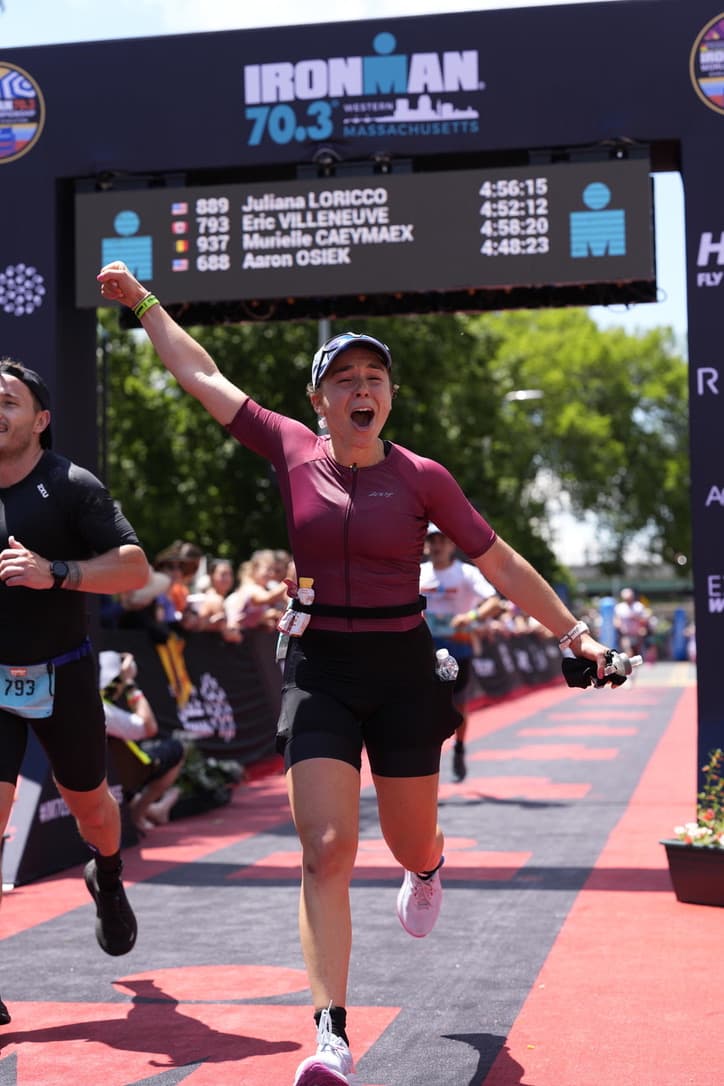
Running in Purple
A Law Student’s Journey Beyond the Finish Line.
Road Running Shoes: What the Categories Actually Mean and How to Choose Between Them
The road running shoe market has fractured into distinct categories over the last decade, driven largely by carbon plate technology. Understanding what each category is built to do — and what it is not — prevents expensive mistakes and, more importantly, prevents buying race-day performance at the expense of training health.
Gear Up and Ship Out: The Logistics of Getting Your Kit to an International Adventure Race
Adventure racing asks you to navigate across terrain you have never seen, by foot, bike, and paddle, for anything from 24 hours to ten days. Getting your equipment from your home to the race start in another country involves a logistics challenge that experienced teams treat as seriously as the physical preparation. Here is what that actually involves.