Chasing a Flat-Course Marathon PB: A Training Framework for Speed-Focused Racing
By ZealZag TeamThe Berlin Marathon course runs through the centre of the German capital and finishes at the Brandenburg Gate. Total elevation change across the 42.2km is approximately 40 metres in each direction — no sustained climbs, wide roads, and consistent pacing conditions across the course. Between 2003 and 2023, nine of the eleven officially ratified marathon world records were set in Berlin: Eliud Kipchoge's 2:01:09 in September 2022 and Tigst Assefa's 2:11:53 women's world record set in 2023 are the most recent. The course is not incidentally fast; it is specifically engineered, by geography and logistics, to produce quick times.
Berlin is the benchmark for what a flat-course marathon looks like. Chicago is comparably flat and runs in mid-October under typically cooler conditions than spring races. Rotterdam is flat. Tokyo (March) is flat. Dubai is flat but introduces heat as a variable. The common characteristic of these events is that the course does not add time: if you run a slow time at Berlin, it is because of the training, the pacing, or the conditions — not because of the course.
Choosing a fast course is the easy part. Preparing specifically for what a flat-course marathon requires is harder.
Establishing the Baseline
Before structuring a training plan, you need an honest performance benchmark. The most reliable predictor of marathon finishing time is a recent half-marathon performance — not because the events are physiologically identical, but because the half marathon tests the aerobic and speed-endurance qualities the full distance requires.
For a sub-3:00 marathon (4:16/km average), a recent half-marathon time of 1:22–1:25 is typically required. For a sub-3:30 marathon (4:59/km), a half in the 1:36–1:40 range suggests readiness. If your current half-marathon personal best is significantly slower than these markers, a PB improvement is absolutely achievable with proper training — but targeting a specific round-number benchmark may be premature for this campaign. Run the training block, reassess at mid-block, and set a race-week target based on what you're actually demonstrating in workouts.
Training Duration and Weekly Volume
Sixteen weeks is the practical minimum for a meaningful preparation block from a maintained aerobic base. Nineteen weeks is more comfortable, particularly for athletes who need time to safely build mileage before introducing speed-specific work. Most training plan authors recommend 16–19 weeks; choosing based on where you're starting is more important than the specific number.
Peak weekly mileage varies by target. A sub-3:00 campaign typically requires 80–100km at peak, with 6–8 sustained weeks at or near that volume before the taper. A sub-3:30 campaign typically peaks at 65–80km.
If your current weekly mileage is more than 30% below these targets, the first four to six weeks of the block should focus on increasing volume before adding intensity. Rushing into interval sessions on an insufficient aerobic base produces injury more reliably than fitness.
Connect with training partners, earn travel miles, and discover terrain worth crossing borders for.
Join ZealZagFollow us on InstagramThree Key Sessions Per Week
Elite marathon programs include more complexity than three hard sessions weekly. For most athletes with jobs, lives outside running, and finite recovery capacity, three quality sessions bracketed by easy running produces the training stimulus that matters.
The long run is the most important session and the most commonly done wrong. It should be long enough to create meaningful aerobic and glycogen-management adaptation — 28–38km in the peak training weeks — and slow enough that recovery is complete within 48–72 hours. Most athletes run their long runs too fast, accumulating fatigue that degrades the quality of the following week's harder sessions.
Target a pace 45–75 seconds per kilometre slower than goal marathon pace for the bulk of the long run. The exception: once in the final eight weeks, include 15–20km at goal-pace running within a 35km long run. This workout is demanding and should be treated as a key race-simulation session, not a routine long run with some pace work bolted on.
The threshold run develops lactate threshold — the pace at which lactate begins to accumulate faster than the body can clear it. For flat-course marathon success, lactate threshold must approach or exceed goal marathon pace. The standard format is 20–40 minutes of sustained threshold work, or intervals of 10–15 minutes with short recovery (2–3 minutes). Threshold pace for most athletes is approximately 20–25 seconds per kilometre faster than goal marathon pace. Running comfortably hard, sustainably uncomfortable — if you need to slow to catch your breath, you've gone too fast.
The speed session addresses VO2 max and running economy at faster-than-race pace. Formats: 8–12 × 1km at 10K race pace with 90-second recoveries; 5–6 × 2km at half-marathon race pace with 2-minute recoveries; 4–5 × 4 minutes at 5K effort. These sessions are demanding and should be separated from threshold and long run days by at least 48 hours of easy running.
Pacing Strategy: The Flat Course Error
Flat courses invite a specific mistake. The absence of early hills removes one natural brake on pace — hills slow you down whether you plan to go easy or not. Athletes who start 5–10 seconds per kilometre faster than their target in the first 8km regularly collapse in the final 8km, losing far more time than the early surplus gained.
The data from mass-participation finishing results is consistent: negative splits (running the second half slightly faster than the first) produce better outcomes for most athletes than positive splits. Perfectly even splits are also valid; the key variable is avoiding a fast first half.
At Berlin specifically, the first 8km through Charlottenburg and Wedding are wide, flat, and buzzing with crowd energy and competitor proximity. This environment produces over-enthusiasm. The race properly starts at 30km; plan your first 30km as insurance against what the final 12km will ask.
For a sub-3:00 attempt, the required pace is 4:15/km or 6:50/mile. For a sub-3:30 attempt, it is 4:58/km. Know these numbers precisely, programme them into your GPS watch, and treat the first 10km as a disciplined patience exercise.
Taper
The taper phase runs 2–3 weeks. Volume drops by approximately 30–40% each week from the peak; intensity is maintained or only slightly reduced. The purpose of the taper is not rest — rest produces detraining, not performance. The taper allows the body to absorb the training stimulus from the preceding months while arriving at the start line recovered from cumulative fatigue.
Physiologically, most athletes feel better and faster during the taper than at any point in training. This produces a common irrational impulse: the urge to do more, or to test fitness with a fast run. Resist both. The fitness that the taper is allowing to surface was built in the preceding weeks; there is nothing meaningful to be added in the final ten days.
Race Week and Course Selection
Berlin's race-day conditions in late September average 12–16°C — close to the physiological optimum for distance running (roughly 10–12°C). Chicago in October runs similarly. These conditions are forgiving compared to spring marathons in warmer climates; they support the consistent pacing that a flat-course PB attempt requires.
Race week: carbohydrate loading from two to three days out is well-established practice for marathon performance. Nothing new — no new foods, no new activities, no new equipment. Sleep matters as much as carbohydrates. A short shakeout run of 10–15 minutes the day before the race is useful to move the legs without creating fatigue.
For course selection beyond Berlin and Chicago: Rotterdam (April) is flat, fast, and well-organised with a strong international field. Valencia (December) has emerged as one of the fastest late-season options in Europe with reliably cool conditions. Tokyo (March) is flat and fast but entry is via ballot for international athletes. All four are good choices for an athlete preparing specifically for a PB; the training framework above applies to any of them.
Keep reading
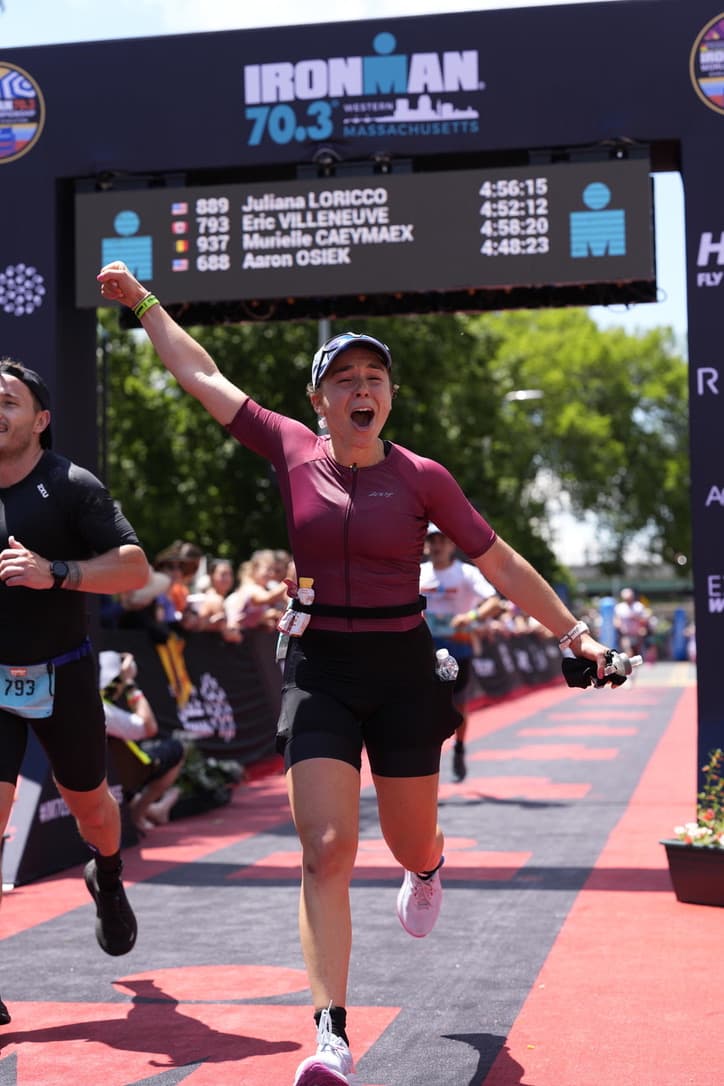
Running in Purple
A Law Student’s Journey Beyond the Finish Line.
Road Running Shoes: What the Categories Actually Mean and How to Choose Between Them
The road running shoe market has fractured into distinct categories over the last decade, driven largely by carbon plate technology. Understanding what each category is built to do — and what it is not — prevents expensive mistakes and, more importantly, prevents buying race-day performance at the expense of training health.
Your First Multi-Day MTB Stage Race: What the Training Actually Looks Like
Stage racing on a mountain bike is a different discipline from a single hard event. The training is different, the equipment choices are different, and the in-race decisions that determine whether you finish comfortably or blow up on day three are different. Here is the framework that experienced stage racers actually use.