First Hydration Pack: Vest Fit, Bladder vs Flask, and Why Most Runners Over-Buy
By ZealZag TeamThe hydration vest is the most over-purchased category of gear in trail running. Runners new to the sport, having absorbed YouTube reviews and Instagram-driven trends, frequently buy a 12-litre vest with 1.5 litres of bladder capacity for races that demand neither. The vest sits in a cupboard after two uses; the runner reverts to a handheld bottle or a smaller pack picked up secondhand.
The right vest for most trail runners is smaller, simpler, and cheaper than they assume. The wrong vest produces back chafe at hour three, sloshing weight that disrupts running rhythm, and the kind of small-but-constant discomfort that turns long days from pleasure into endurance.
The framework below addresses the three decisions that matter — capacity, fit, and bladder versus flask — and the secondary considerations that distinguish a vest you reach for instinctively from one you regret.
Capacity: Less Is More
Vests are sized by total volume in litres. The standard categories:
2–5L vests are the lightest, most minimalist option. Designed for runs up to 2–3 hours where the only carried items are water, a phone, gels, and perhaps a thin shell. Mandatory race kit lists for shorter trail races (under 25K) are typically accommodated.
5–8L vests are the workhorse category for most trail runners. Sufficient capacity for 4–7 hour runs with mandatory kit (rain shell, emergency blanket, head torch, food, water, basic first aid). Most marathon-distance trail races and 50K events fit comfortably within this volume.
8–12L vests are for ultra-distance races and adventurous personal runs requiring extended self-sufficiency. The volume accommodates additional layers, longer-duration food supply, and the kit demanded by 100K+ race rules.
12L+ vests approach bikepacking-style capacity and are appropriate for self-supported multi-day attempts, expedition-style trail running, and races with the longest mandatory equipment lists.
The capacity error new runners make: buying for the largest race they might do, rather than for the runs they actually do. A runner whose typical session is 90 minutes on local trails and whose longest planned race is a marathon-distance trail event needs a 5–6L vest, not a 10L vest. The larger vest carries the same items less stably, weighs more empty, and is more prone to sloshing and shift on the back.
The simpler rule: buy for your most common use case, not for your most ambitious one. A 6L vest used three times a week is more valuable than a 10L vest used once a month.
Fit: The Decision That Outranks Brand
The most important variable in vest selection is fit. A correctly-sized vest from a less-known brand outperforms a poorly-sized vest from a market leader by every measure that matters.
Vest fit is measured by chest/torso circumference. The vest should:
- Sit high enough on the torso that bouncing weight does not strike the hips with each stride.
- Wrap the torso closely enough that the bottle pockets and bladder stay still during running motion.
- Allow full breathing depth — chest expansion at full inhalation should not be restricted.
- Allow free arm motion — the arm strap should not impinge on the shoulder during arm swing.
Most vests sized by S/M/L offer a 5–7cm range per size. Some manufacturers offer additional adjustment via sliding closure strands; others rely on the size alone. Athletes between sizes typically benefit from sizing down — a slightly tight vest stays still better than a slightly loose one, though tightness must not impair breathing.
The single most important fit check: try the vest with the intended load and run for 10–15 minutes. A vest that fits well empty often fits poorly with 1.5L of water and a phone. A vest that fits well in a shop while standing often fits poorly on a 4-hour run. The 10–15 minute loaded test catches problems before the long run does.
Common fit failures and their cause:
- Bouncing on every stride: Vest is too loose; check sliding adjusters and consider sizing down.
- Back chafe at the shoulder blades or low back: Vest fabric is rubbing against bare skin; consider a tighter-fitting base layer or a different vest cut.
- Restricted breathing under load: Vest is too tight or sits too high; loosen adjusters or size up.
- Front pockets pressing into chest: Vest sits too high; adjust shoulder straps or check size.
Connect with training partners, earn travel miles, and discover terrain worth crossing borders for.
Join ZealZagFollow us on InstagramBladder vs Flask: The Real Trade-Offs
The two carrying systems represent different philosophies. The choice is not religious; it depends on use case.
Bladder (reservoir): A flexible water container, typically 1.5–2L, that sits against the back inside the vest. A drinking tube routes over the shoulder to a bite valve.
Flasks: Soft-sided collapsible bottles, typically 500ml or 1L, that sit in front pockets on the chest of the vest.
Bladder advantages: - Higher single-container capacity (1.5–2L vs 500ml per flask). - Hands-free drinking — no need to retrieve a bottle. - Stable weight distribution on the back. - Easier sipping in technical terrain where pulling out a flask is awkward.
Bladder disadvantages: - Difficult to monitor remaining water (no visual cue). - Awkward to refill mid-run; the bladder must be removed from the vest, opened, filled, closed, reseated. - Failure mode is total — a leak empties all carried water at once. - Maintenance burden (cleaning, drying) is significant; bladders develop biofilm if not properly maintained. - Tube and bite valve can freeze in cold conditions; tube management can develop kinks that block flow.
Flask advantages: - Visible water level allows pacing of fluid intake. - Quick to refill from aid station jugs or stream sources. - Failure of one flask still leaves the others functional. - Easier to clean and maintain. - Better for electrolyte solutions, which can stain or accumulate in bladders.
Flask disadvantages: - Smaller per-flask capacity requires multiple containers for long runs. - Drinking requires retrieving and replacing the flask. - Less stable on rough terrain — flasks can shift or fall out of pockets in some vest designs.
The practical guidance:
- For races where aid stations are 5–15 km apart: Flasks. The refill convenience and pacing visibility outweigh bladder advantages.
- For self-supported runs of 4+ hours with limited water sources: Bladder, often supplemented by 1–2 flasks for electrolyte drinks.
- For technical terrain (steep, hands-required scrambling): Bladder, to keep hands free.
- For races with hot weather and high sweat rates: Flasks for the pacing visibility; runners under-drink with bladders because they cannot see remaining volume.
Many experienced ultra runners use both: bladder for plain water (long-duration carrying capacity), flasks for electrolyte solutions (easier to refill at aid stations, pacing visibility).
Secondary Considerations
Once capacity, fit, and bladder/flask are decided, additional features matter:
Pole carry system. If the runner uses trekking poles for steep climbing or descending, the vest must accommodate them — typically via elastic loops on the back or a dedicated pole quiver. Some race rules require specific pole-carry methods (poles must be stowed during certain technical sections).
Whistle. Many race kit lists mandate a whistle. Vests with integrated whistles save the runner from clipping one to the strap.
Reflective elements. Useful for early-morning starts or evening finishes.
Pocket design. Front pockets for food, gels, and frequently-accessed items should be large enough for items in their packaged form. Back pockets for shells and emergency kit should be accessible without removing the vest.
Stretch versus structured fabrics. Stretch panels improve fit across body shapes but can sag with weight; structured fabrics hold form better but offer less size accommodation.
Don't Over-Buy
The trail running gear industry rewards over-purchase. Larger vests are more profitable than smaller ones; brand marketing emphasises the ultra-distance use case that produces aspirational photography even though most runners' actual use case is much simpler.
The vest you reach for instinctively week after week is the one that fits well, carries what you actually need for your typical run, and disappears against your body. That vest is usually smaller, simpler, and less expensive than the one being marketed.
For most trail runners, a well-fitted 5–6L vest with two flask pockets and basic stash pockets is the right answer. Upgrade later if your runs genuinely outgrow it. Most do not.
Keep reading
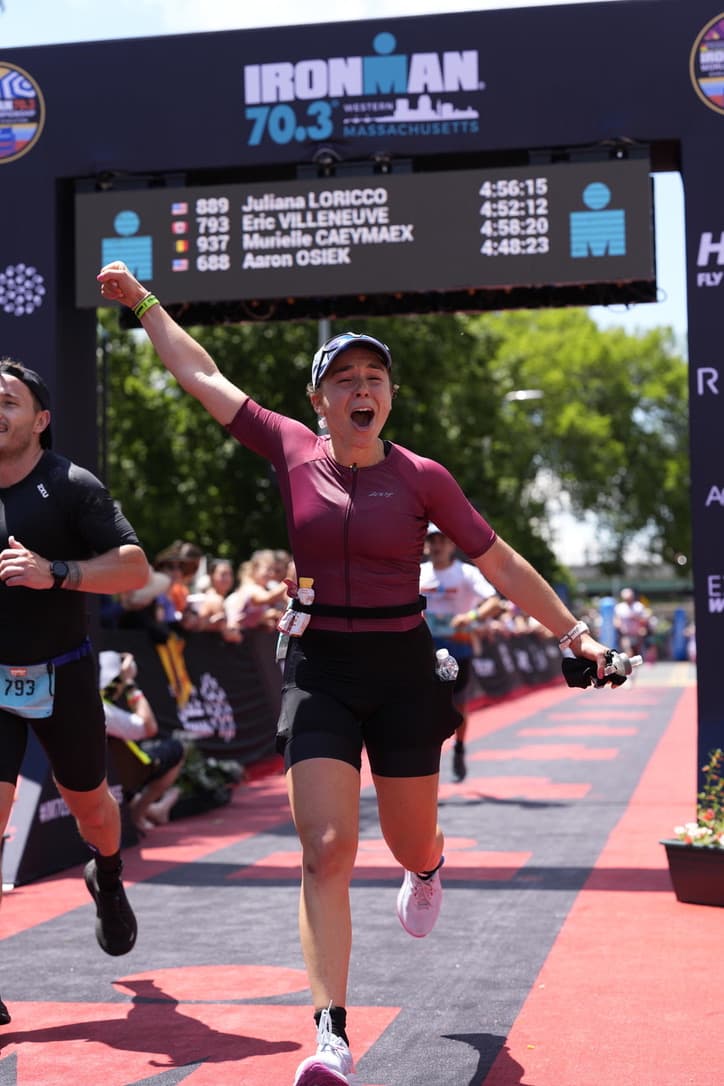
Running in Purple
A Law Student’s Journey Beyond the Finish Line.
Val d'Aran VDA 163K 2026: Europe's Biggest Mountain Ultra Is Running Now
The HOKA Val d'Aran by UTMB's flagship 163K race — Europe's biggest trail ultra and a direct qualifier to UTMB Mont-Blanc 2027 — departed Vielha at dawn this morning with 7,500 runners from 91 countries.
Road Running Shoes: What the Categories Actually Mean and How to Choose Between Them
The road running shoe market has fractured into distinct categories over the last decade, driven largely by carbon plate technology. Understanding what each category is built to do — and what it is not — prevents expensive mistakes and, more importantly, prevents buying race-day performance at the expense of training health.