The Non-Glamorous Side of Running a Destination Marathon
By ZealZag TeamThe training plan ends at the start line. Everything between booking the race and arriving at the start line is logistics — and in destination marathons, the logistics are extensive, sometimes exhausting, and rarely covered in the sixteen-week programmes athletes follow to prepare.
Here is what the non-glamorous side of a destination marathon actually involves.
Registration: The Timeline Nobody Warns You About
The Abbott World Marathon Majors — Tokyo, Boston, London, Berlin, Chicago, New York, and Sydney — operate on lottery or qualifying-standard systems. Planning for the event you want to run means planning 12–18 months before race day, not 6.
Tokyo uses a general entry lottery that opens and closes in the northern hemisphere autumn for a race the following March. The draw is random; acceptance rates vary by year and nationality. Boston uses a qualifying standard — a time-based entry system where the required pace varies by age group and the bar has progressively tightened as the field has grown. Hitting the qualifying standard does not guarantee entry; the field fills from the fastest qualifiers down, and in recent years an additional 2–5 minutes faster than the standard has been required to receive an invitation. London, Berlin, Chicago, and New York all run entry lotteries with acceptance rates that vary but are routinely below 20% for the most popular age groups.
Charity places exist at all major events. They bypass the lottery and qualifying system but carry significant fundraising minimums — typically £2,000–£5,000 at London, similar figures at the others — and require a commitment made well in advance of race day.
Smaller destination marathons — Valencia in December, Amsterdam in October, Barcelona in March — use open registration on a first-come basis. These events fill fast (Valencia, which hosts the world record in the men's event, sells out within hours of opening), but the planning horizon is months rather than years. For athletes who want a destination marathon experience without the lottery system, these are the practical entry points.
The Course Matters for Training, Not Just Experience
Berlin is flat. The world marathon record has been set there three times, and the reason is straightforward: negligible elevation change (roughly 75 metres of total gain across 42 kilometres), wide straight avenues, and reliable September temperatures. If you train primarily on hilly roads and plan to race Berlin, your legs will feel the transition in ways that affect your pace — hill-trained muscle patterns do not automatically transfer to flat-road efficiency, and the last 10 kilometres will expose the gap.
Boston is a different problem: the course starts at around 145 metres above sea level in Hopkinton and finishes at sea level in Boston, net downhill but with the Newton Hills arriving at kilometres 27–33 of the race. Athletes who trained exclusively on flat roads have historically struggled with the eccentric load of the descent sections, which accumulates through 27 kilometres before the Newton climbs and returns. Tokyo is largely flat with mild undulations and bridge crossings; Valencia has less than 30 metres of total elevation gain across the full course.
Look at the elevation profile of your target race before you write your final training block. The last 8 weeks of preparation should reflect the course you're running.
Connect with training partners, earn travel miles, and discover terrain worth crossing borders for.
Join ZealZagFollow us on InstagramTime Zones: The Underestimated Variable
Tokyo is 8–9 hours ahead of Central European Time and 9–10 hours ahead of UK time. The race starts at approximately 09:10 local time. An athlete who flew in 36 hours before the start gun has not adapted. Standard adaptation guidance suggests roughly one day per time zone crossed for meaningful adjustment; for Tokyo from Europe, that means 4–5 full days is the minimum for anything resembling race-day readiness.
US marathons — Boston, Chicago, New York — are 5–6 hours behind UK and Central European time. Westward adjustment is generally faster than eastward; most athletes manage the shift in 2–3 days. Arrive 2 nights before the race at minimum; 3 nights is the sensible standard.
Practical pre-travel adjustment: begin shifting bedtime 30–45 minutes earlier (for eastward travel) or later (westward) in the 5–7 days before departure. Use the destination's local mealtimes from your first day of arrival. Avoid napping for longer than 20 minutes in the afternoon local time during the first two days. Light exposure in the morning at your destination helps reset circadian timing faster.
The Expo: Account for It
Major marathon expos are large, noisy, and require significant walking. Berlin's Messe venue, London's ExCeL, Chicago's McCormick Place — these are convention centre-scale operations, and the packet pickup process involves navigating from registration desk to timing chip to race-day bag collection to mandatory bag check. Budget a minimum of 60–90 minutes inside the venue, with the possibility of it running longer. The crowds on expo day (typically two days before the race) are dense and the queuing at popular booths extends waits further.
The sensible approach: collect your bib on the first day the expo opens, early in the morning. This minimises queue time, gives you the rest of the day to rest, and removes the risk of expo-induced exhaustion the day before the race. Do not plan to browse sponsor stalls and collect samples on the day before you race. Get in, get your bib, get out.
Race Week: Feet Before You've Started
This is the logistic that most destination marathon guides ignore: race week involves an enormous amount of walking before you reach the start line.
Airport to hotel: depending on the city, 30–90 minutes of transit, often on foot for the last section. Expo: as described above. Dinner reservations in unfamiliar cities mean navigation, waiting, and standing. The start-line assembly for major marathons requires arriving 45–90 minutes early and standing in corrals or pens for that duration. Post-race, you are walking — potentially 1–2 kilometres — from finish area to bag collection to transport.
The cumulative time on feet across race weekend can reach 8–10 kilometres before you've run a step. This is not catastrophic if you account for it; it is a meaningful energy drain if you don't. The classic version of this mistake is the athlete who walks the city sightseeing the two days before the race and wonders why their legs feel flat at kilometre 30.
The Night Before
Everything the training plan says about carbohydrate loading and sleep hygiene is true. The things the plan doesn't say: eat at restaurants you've already identified and booked, not ones you find by walking around. The time spent searching for dinner in an unfamiliar city on the eve of a marathon is time your legs should be elevated. Lay out your race kit the night before — bib, shoes, nutrition, timing chip, everything — so the morning routine is automatic.
Race morning transport: find out the specific route and timing the night before. Major marathons have dedicated athlete transport options that save significant time and stress; Tokyo's train access to the start, Berlin's S-Bahn to Tiergarten, London's coach system from Greenwich — each city has its own pattern, and understanding it in advance removes the single biggest anxiety source of race morning.
The non-glamorous reality of destination marathon running is that the race is the part your training prepared you for. Everything before the start line requires preparation of a different kind.
Keep reading
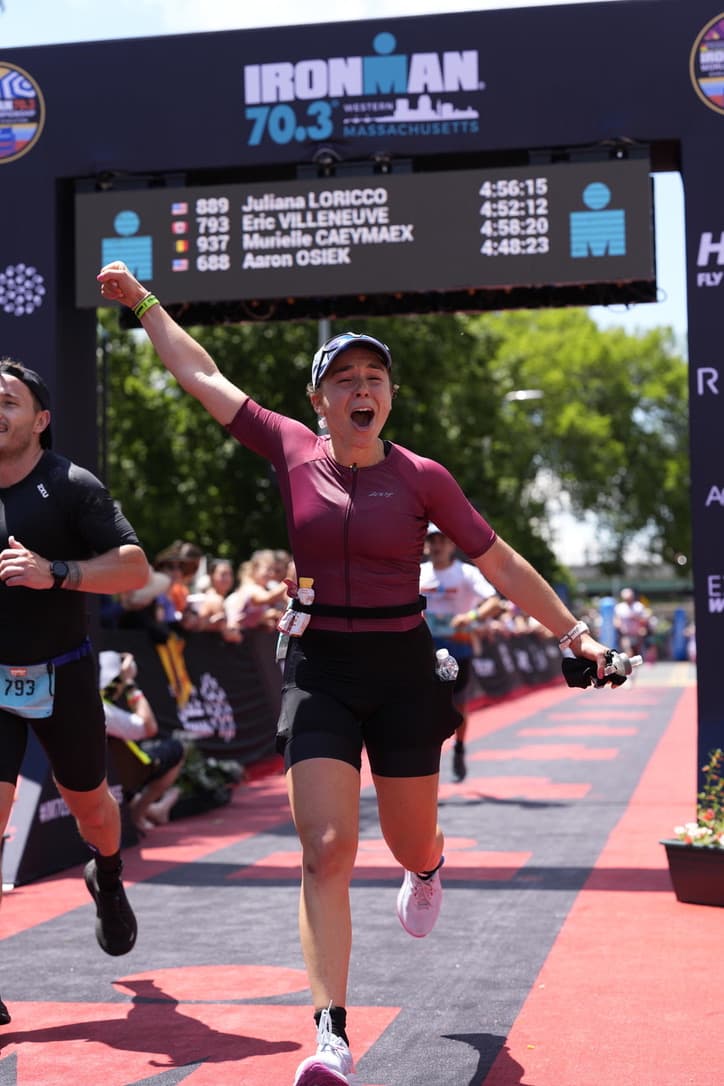
Running in Purple
A Law Student’s Journey Beyond the Finish Line.
Road Running Shoes: What the Categories Actually Mean and How to Choose Between Them
The road running shoe market has fractured into distinct categories over the last decade, driven largely by carbon plate technology. Understanding what each category is built to do — and what it is not — prevents expensive mistakes and, more importantly, prevents buying race-day performance at the expense of training health.
Planning Your First Sport Climbing Trip Abroad: What to Pack, Where to Go, and How to Not Destroy Your Fingers by Day Three
A sport climbing trip to a European crag involves more logistical decisions than most other forms of destination athletics, and fewer of those decisions are obvious until you have already made the wrong one. The gear is heavy, crag access is rarely straightforward, and managing climbing load across seven to twelve days requires deliberate planning.